Animal groupBird
Zoobitat’s Animal Field Guide
Meet the Great Horned Owl
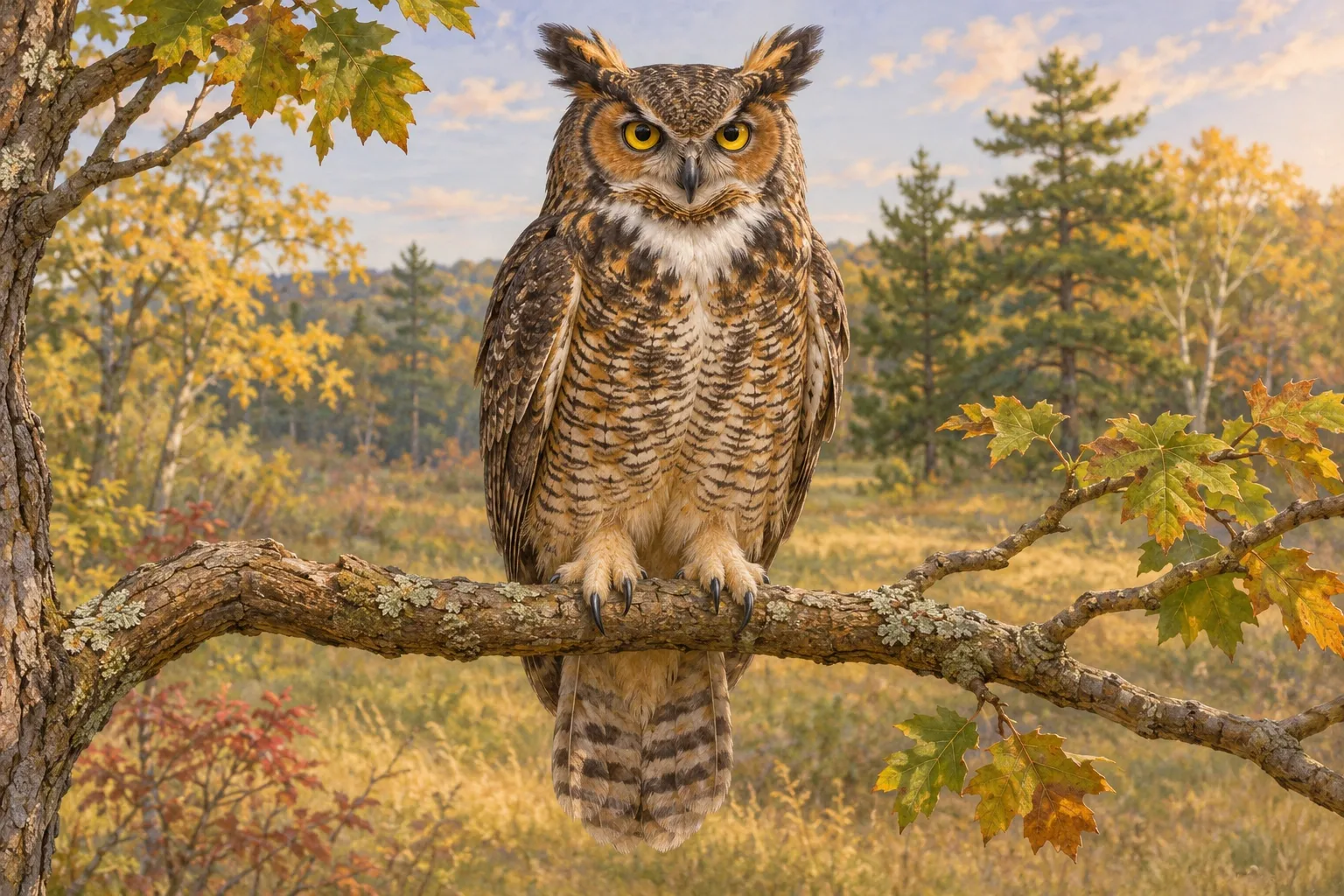
Meet a woodland owl with bright yellow eyes and a deep, hooting voice. Its feather tufts look like tiny horns!

STEM.org AccreditedEducational wildlife learning for curious explorers ages 4–10
Featured video: The Great Horned Owl
Quick facts
Great Horned Owl Animal File
Scan the essentials, then explore each topic below.
HomeWoodlands and open country across much of North and Central America
DietVoles, mice, rabbits, and other small animals
Length45 to 63.5 centimeters (18 to 25 inches) adult body length; females usually larger
ConservationLeast Concern
Get to know great horned owls
A quiet hunter of the night
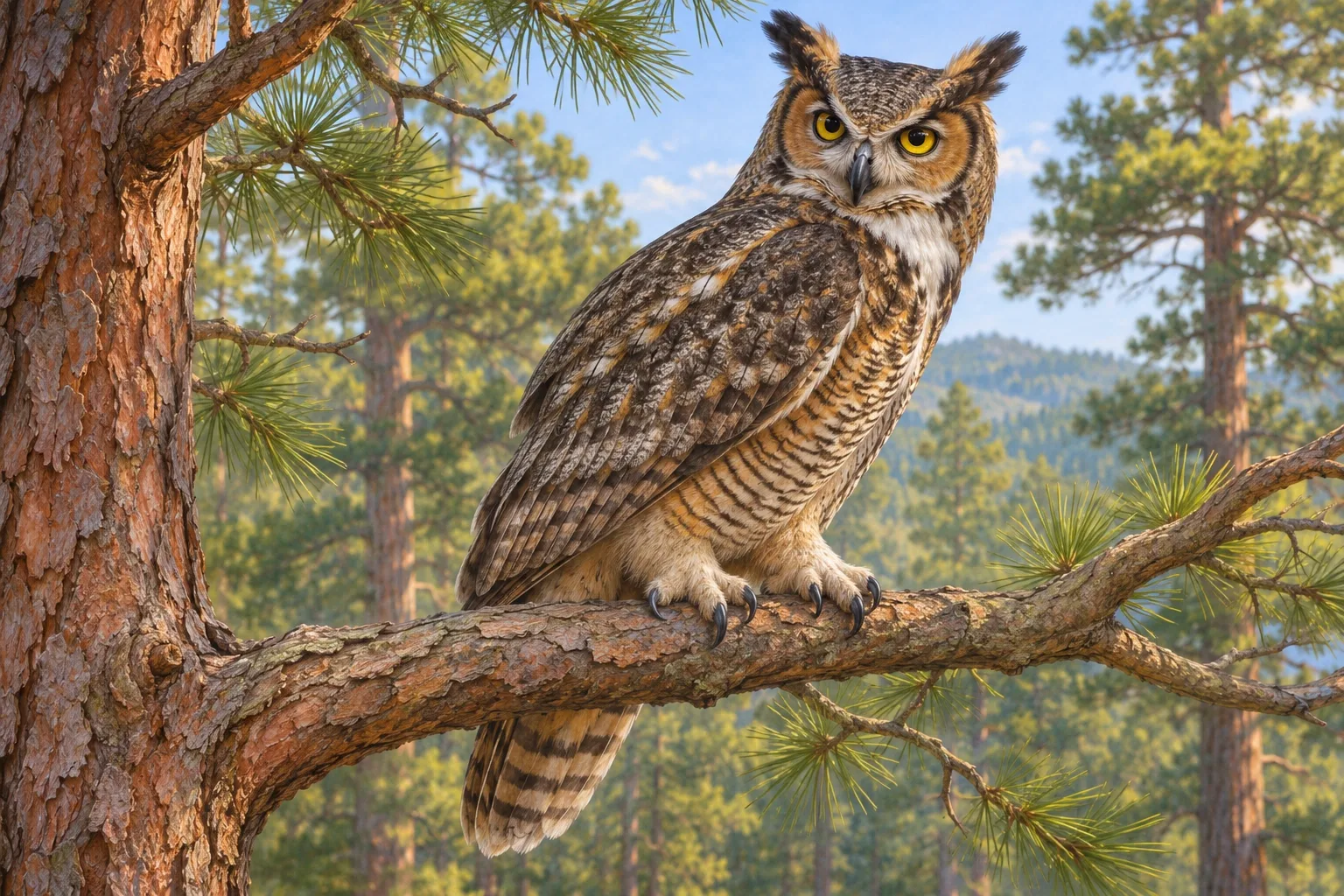
Great horned owls live across much of North and Central America. They hunt mainly at night and rest in sheltered places during the day. Most live alone outside the breeding season.
Adults measure about 45–63.5 centimeters (18–25 inches) long and weigh around 0.9–2.5 kilograms (2–5.5 pounds). Females are usually larger than males. Their mottled feathers help them blend with tree bark.
Feather Tufts
Those hornlike points are feather tufts. The owl’s real ears are hidden beneath feathers on the sides of its head.
Quiet Wings
Soft feather edges help this owl fly quietly. Quiet flight helps it listen for small animals moving below.
A Face That Helps Hearing
Feathers around the face form a facial disk. This disk helps direct sound toward the owl’s hidden ears.
A Borrowed Nest
Great horned owls do not build their own nests. They often reuse old nests built by other birds.
Explore its habitat: Boreal Forest
Watch, listen & learn
Watch, Listen & Learn
Watch, listen and learn about the great horned owl with Zoobitat.
Play & learn
Try a Great Horned Owl Challenge
Color a great horned owl, build a boreal forest habitat, then test what you learned in the quiz.
Try it now
Zoom with +/− or pinch on a touchscreen. Shift-drag to move on desktop.
Color the Great Horned Owl
Fill each area, draw your own details, or erase a change. The great horned owl’s outlines always stay clear.
Try it now
Build a Boreal Forest Habitat
Drag the stickers anywhere in the landscape.
Habitat builder
Boreal Forest
Choose a sticker to begin building your boreal forest.
Try it now
Great Horned Owl Quick Quiz
Use what you learned in A Quiet Hunter of the Night. Get all three answers right to unlock your certificate!
0 of 3 correct
Question 1 of 3
1What are the hornlike points on this owl’s head?
Your Great Horned Owl CertificateAnswer all three questions correctly, using what you learned above, to unlock it.
Why great horned owls matter
Keep Woodlands Welcoming
Great horned owls need safe resting places and room to hunt. Connected woodlands and open areas support their food and shelter.
- Watch resting owls quietly from far away with a grown-up.
- Keep litter out of woodland paths.
- Ask a grown-up about wildlife-friendly ways to manage rodents.
- Leave nests and nesting trees undisturbed.
More From the Animal Field Guide
 Animal Field Guide
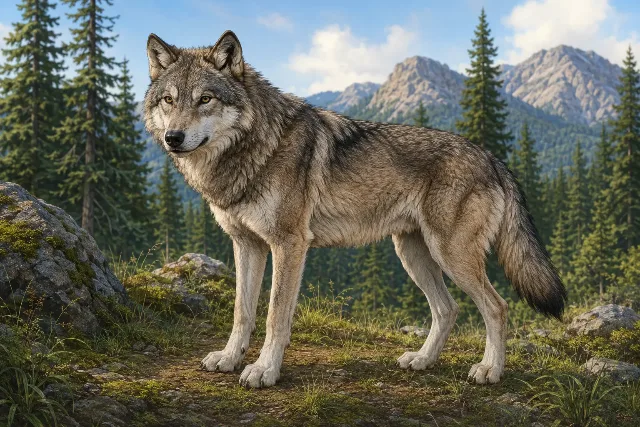
Gray Wolf
Wolf families use howls to find one another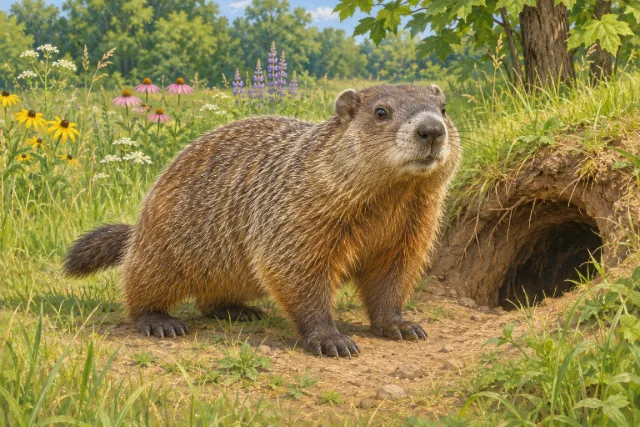 Animal Field Guide
Groundhog
A groundhog’s front teeth keep growing throughout its life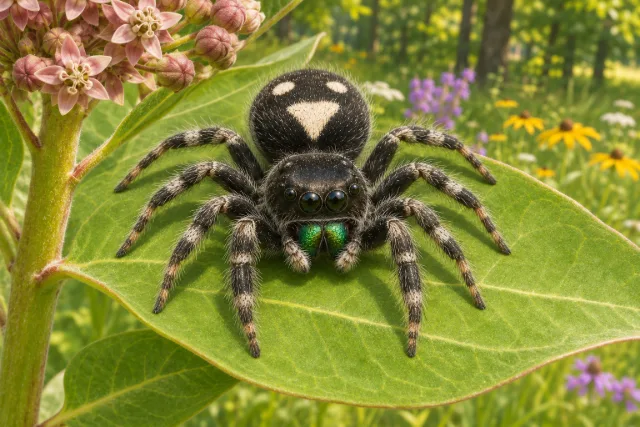 Animal Field Guide
Jumping Spiders
Jumping spiders use sharp vision to plan their leaps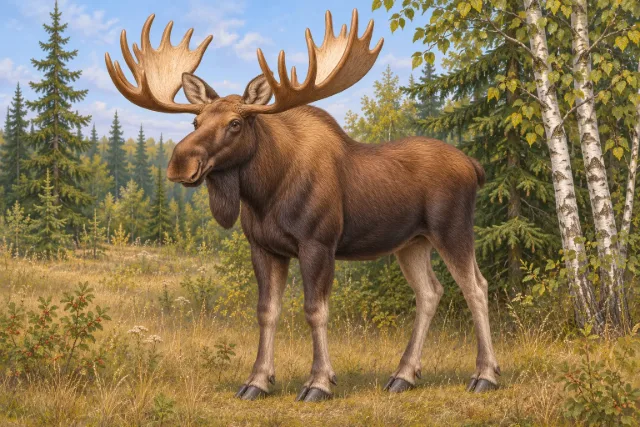 Animal Field Guide
Moose
Moose can swim and eat plants growing in water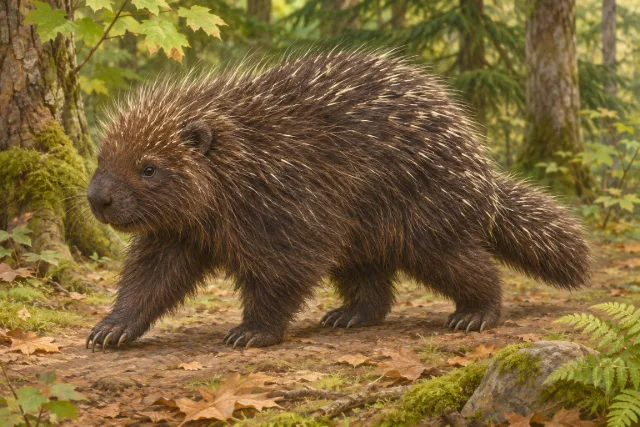 Animal Field Guide
Porcupines
Porcupines cannot shoot their quills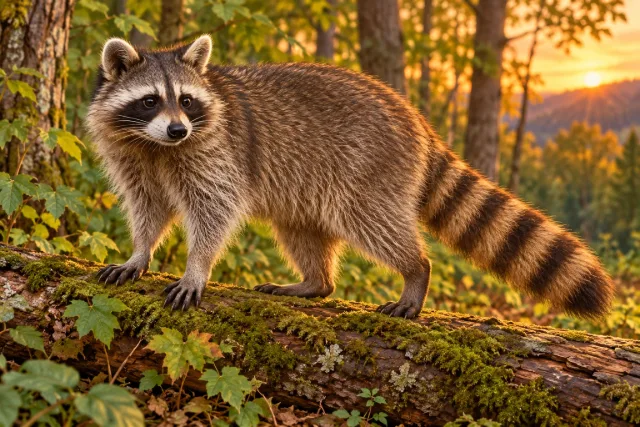 Animal Field Guide
Raccoon
A nighttime explorer with sensitive front paws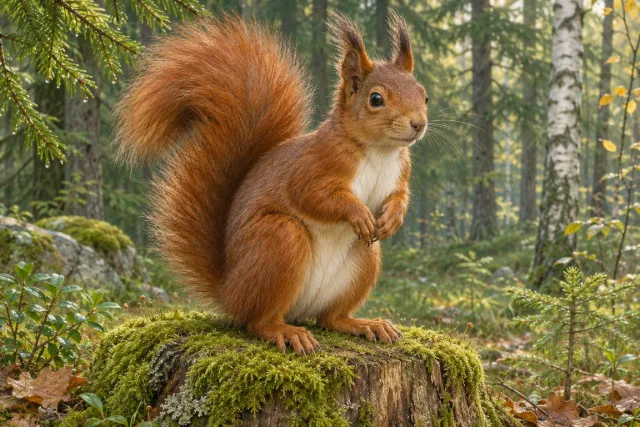 Animal Field Guide
Red Squirrel
A bushy tail helps this treetop climber balance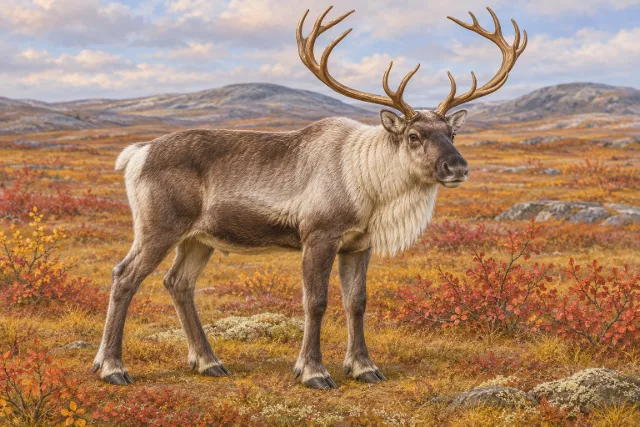 Animal Field Guide
Reindeer
Both male and female reindeer can grow antlers
Lox says: There are more amazing animals and habitats waiting to meet you!
Grown-Up GuideLearning goals, privacy, standards, sources and more resources
For parents, caregivers & educators
Explore with confidence
This guide explains what children can learn, how the page approaches privacy, and where its great horned owl information comes from.
✓ STEM.org Accredited✓ NGSS-aligned learning✓ COPPA-conscious design
Learning goals
Children connect feather tufts, quiet flight, hearing, and reused nests with a great horned owl’s life.
Try exploring together
- Point to the feather tufts, then explain where the real ears hide.
- Spread your arms and imagine gliding quietly between trees.
- Find a sheltered resting place in your pretend owl habitat.
Privacy by design
This page uses a data-minimizing, COPPA-conscious approach. It does not ask children for a name, birthdate, email address, account, photo, voice recording, camera, microphone or precise location.
The games work without sign-in, media never autoplays, and embedded videos use YouTube’s privacy-enhanced domain.
Learn about COPPA at the FTC ↗STEM & NGSS connections
Zoobitat’s free wildlife and nature education program has earned the STEM.org Accredited™ Trustmark. This page supports observation, evidence-based discussion and life-science learning.
- 2-LS4-1: Compare the diversity of life in different habitats ↗
- 3-LS4-4: Explain how habitat change affects organisms ↗
Science sources
Great Horned Owl facts were checked against the following wildlife organizations and educational references:
- National Wildlife Federation - Great Horned Owl ↗Feather tufts, quiet flight, camouflage, and solitary behavior outside breeding; disregard pre-split range and status.
- The Peregrine Fund - Great Horned Owl ↗Facial disk, nocturnal behavior, hooting, and nest reuse; disregard pre-split South American range.
- Zoo Idaho - Great Horned Owl ↗Adult length, mass, wingspan, and appearance; older broad range and status are not adopted.
- Cornell Clements Checklist - October 2026 Updates ↗Current species scope after the October 2026 split: Bubo virginianus in North and Central America.
- US Fish and Wildlife Service - Great Horned Owl at Seedskadee ↗Voles as verified representative prey in Wyoming; mainly nocturnal activity.
- Owl Research Institute - Owl Adaptations ↗Four toes per foot, reversible outer toe, feather fringes, and anatomy review.
More from Zoobitat
Keep exploring with free educational resources for families, caregivers and educators:
- Free Wildlife Exhibits Download educational exhibit artwork for zoos, aquariums, schools and community spaces.
- Educator Resources Explore free materials created for classrooms, homeschool learning and family discovery.
- Early Readers Meet wildlife through illustrated, kid-friendly Zoobitat Animal Rescue stories.
- Activity Books Continue learning with wildlife-themed puzzles, activities and creative challenges.
- Zoobitat Expeditions Follow conservation adventures and discover animals and habitats in the field.
- Meet the Hosts Discover the zoos, museums, aquariums and other organizations that have hosted Zoobitat’s free, museum-quality wildlife exhibits.
Media & accessibility record
Character and great horned owl visuals are Zoobitat educational assets. Voiceovers require a deliberate play action. Interactive controls have descriptive labels and are keyboard accessible.
Picture credits: Zoobitat Studios, LLC.