
Animal groupMammal
Zoobitat’s Animal Field Guide
Meet the Groundhog
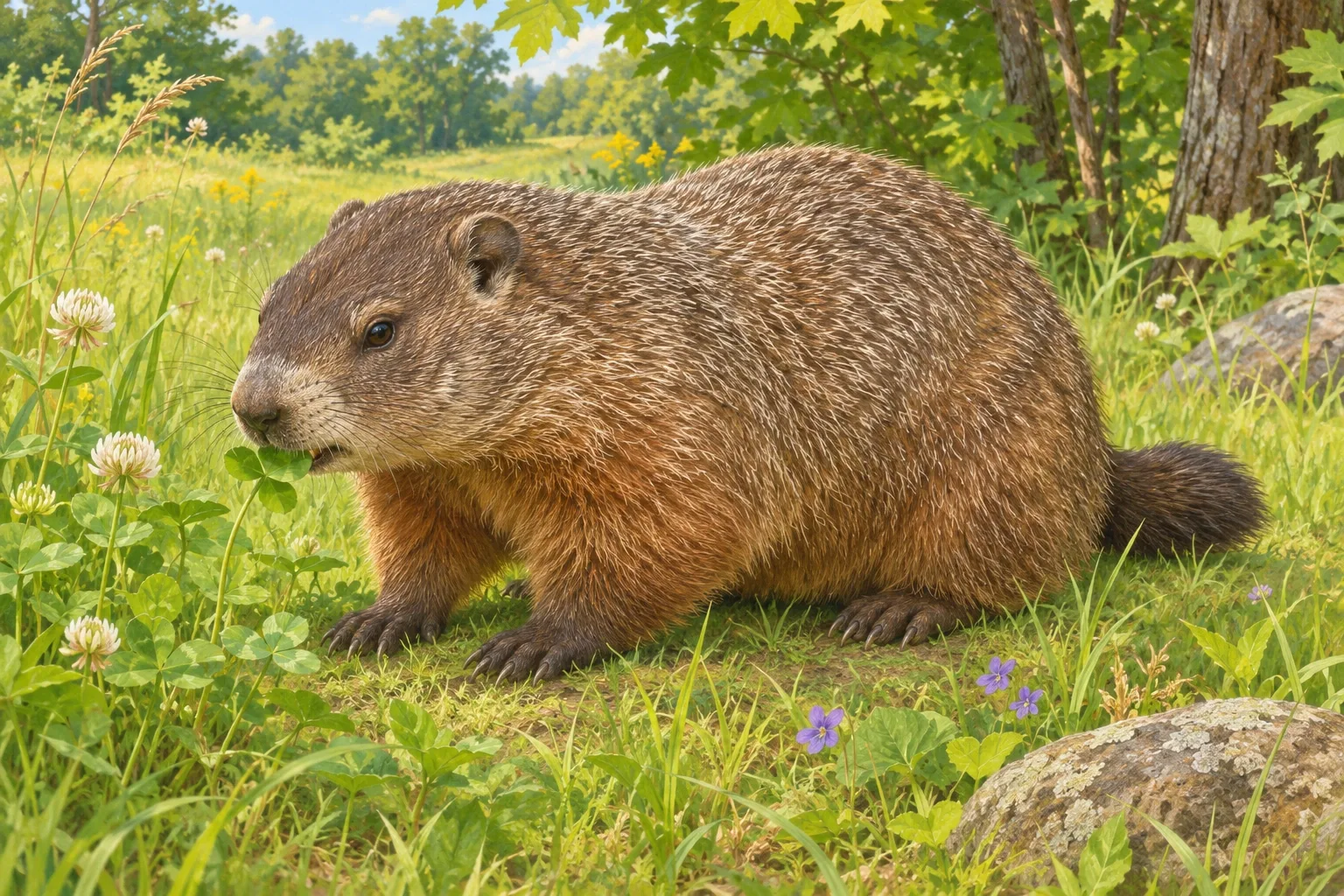
A furry neighbor pauses beside a burrow. Meet the groundhog, a strong digger with a whistling voice.

STEM.org AccreditedEducational wildlife learning for curious explorers ages 4–10
Featured video: The Groundhog
Quick facts
Groundhog Animal File
Scan the essentials, then explore each topic below.
HomeFields and woodland edges across much of North America
DietMainly grasses, clover, other leafy plants, and seasonal fruits
Length41.5 to 67.5 centimeters (16 to 27 inches) Adult total length including tail; size varies geographically.
Lifespan4 to 6 years Reported typical wild lifespan; many individuals live shorter lives.
ConservationLeast Concern
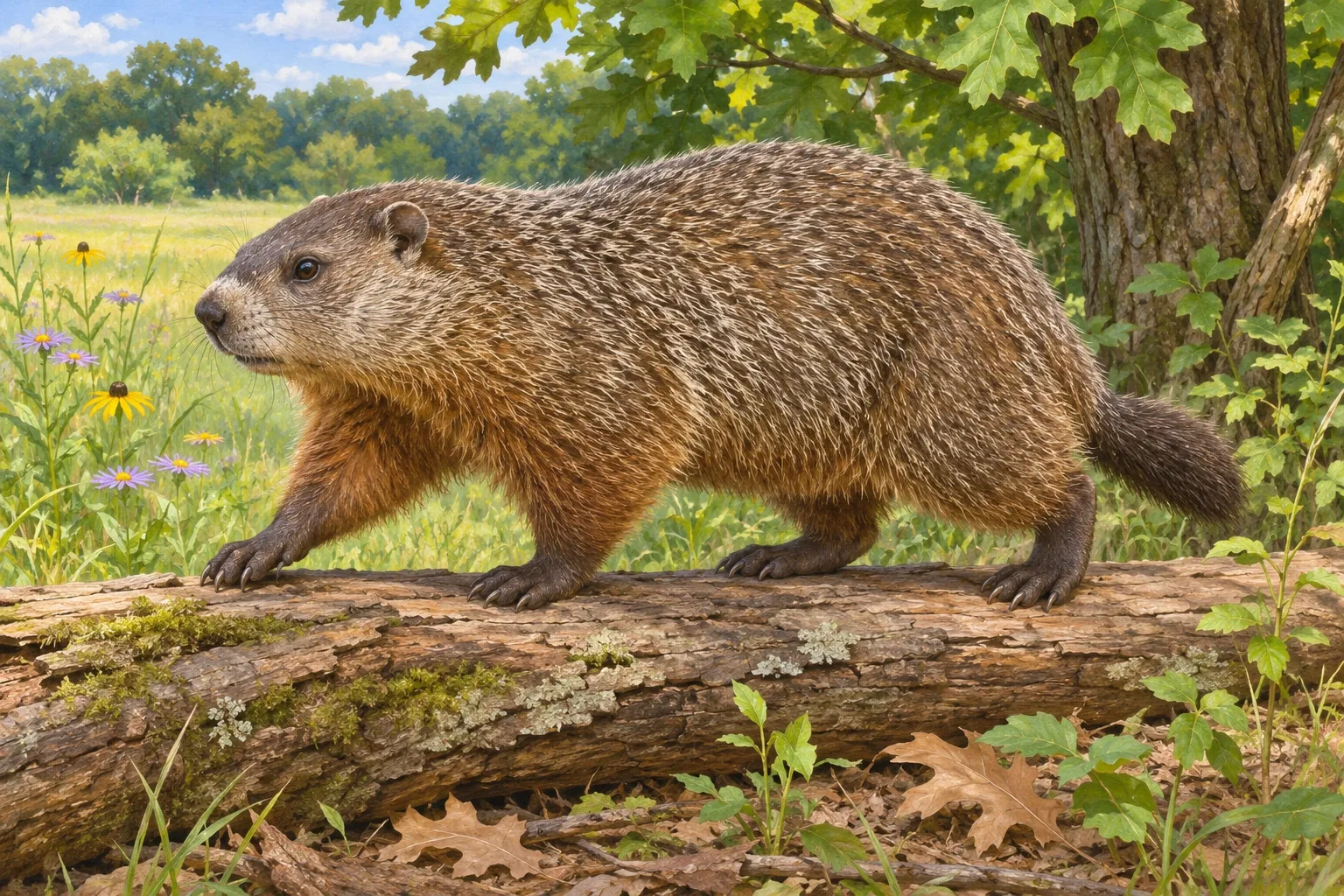
Meet the groundhog
A Digger with a Winter Plan
Groundhogs are large ground squirrels, also called woodchucks. They live near fields, grassy clearings, and woodland edges. Adults usually live alone, except when breeding or caring for young.
Adult total length is about 41.5–67.5 centimeters (16.3–26.6 inches), including the tail. Adults commonly weigh 2–6 kilograms (4.4–13.2 pounds), with big seasonal changes. Groundhogs are active during the day, often in mornings and afternoons.
Built to Dig
A groundhog digs with strong legs and curved claws. In a burrow, it makes tunnels and sheltered rooms. These offer places to rest and raise young.
Teeth That Keep Growing
A groundhog is a rodent with front teeth that keep growing. Chewing plants and gnawing roots help wear them down. These strong teeth are useful tools.
A Winter Slowdown
In colder places, groundhogs spend winter hibernating underground. Their bodies cool, and their heartbeats slow. Stored body fat provides energy. This helps them through months with little food.
A Whistling Warning
A groundhog can make a loud, sharp whistle. This call can signal danger. That whistle helped give groundhogs the nickname whistle pigs.
Explore its habitat: Boreal Forest
Watch, listen & learn
Watch, Listen & Learn
Watch, listen and learn about the groundhog with Zoobitat.
Play & learn
Try a Groundhog Challenge
Color a groundhog, build a forest and woodland edge habitat, then test what you learned in the quiz.
Try it now
Zoom with +/− or pinch on a touchscreen. Shift-drag to move on desktop.

Color the Groundhog
Fill each area, draw your own details, or erase a change. The groundhog’s outlines always stay clear.
Try it now
Build a Forest and Woodland Edge Habitat
Drag the stickers anywhere in the landscape.
Habitat builder
Forest and Woodland Edge

Place pangolins where they can reach food and shelter, then add ants, a termite mound, a hollow log and leafy cover.
Try it now
Groundhog Quick Quiz
Use what you learned in A Digger with a Winter Plan. Get all three answers right to unlock your certificate!
0 of 3 correct
Question 1 of 3
1Where does a groundhog make sheltered rooms?
Your Groundhog CertificateAnswer all three questions correctly, using what you learned above, to unlock it.
Why groundhogs matter
Room for a Digger
An empty groundhog burrow can later shelter other wildlife. Healthy fields and woodland edges give groundhogs food and shelter. People can share these places thoughtfully.
- Watch from far away with a grown-up.
- Give burrow entrances plenty of space.
- Ask a grown-up about wildlife-friendly garden fencing.
- Keep litter out of grassy places.
More From the Animal Field Guide
 Animal Field Guide
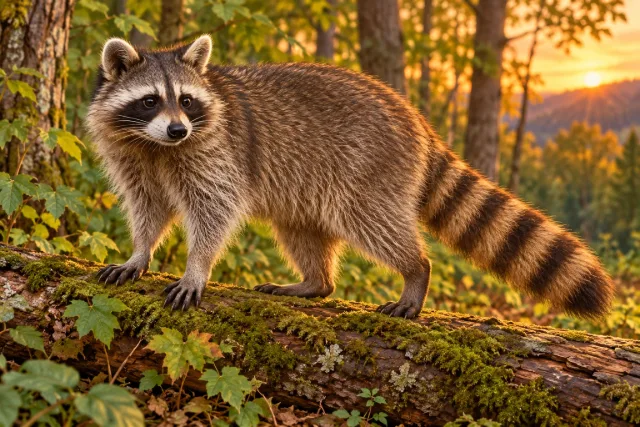
Raccoon
A nighttime explorer with sensitive front paws Animal Field Guide
Red Fox
Red foxes can listen for tiny animals hidden in grass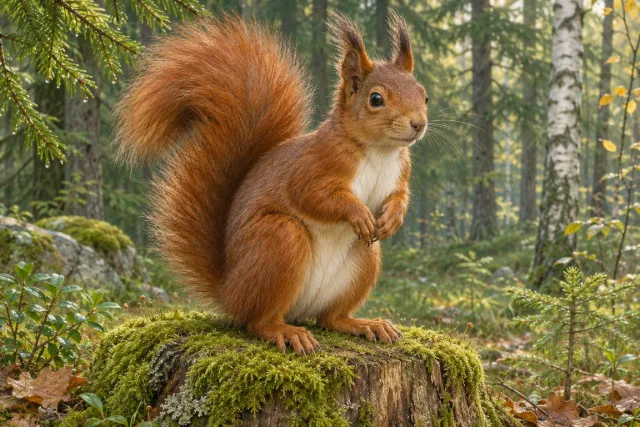 Animal Field Guide
Red Squirrel
A bushy tail helps this treetop climber balance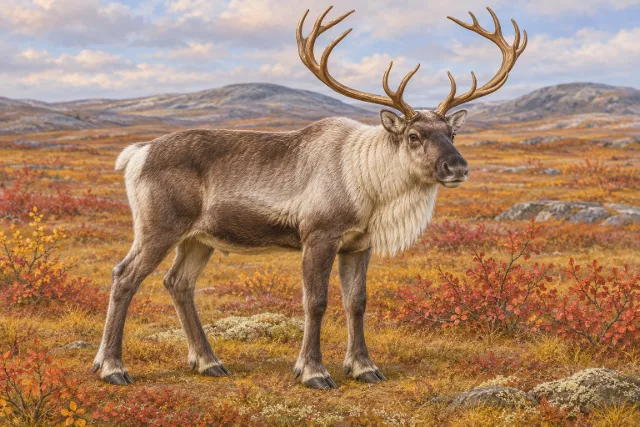 Animal Field Guide
Reindeer
Both male and female reindeer can grow antlers Animal Field Guide
Bald Eagle
An adult bald eagle’s white head is covered in feathers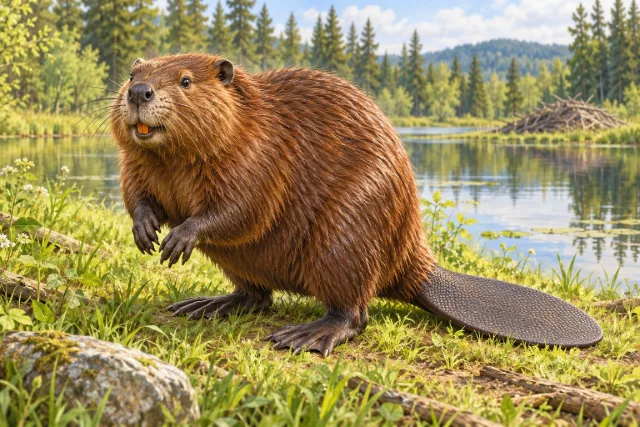 Animal Field Guide
Beaver
Beaver dams can create homes for many kinds of wildlife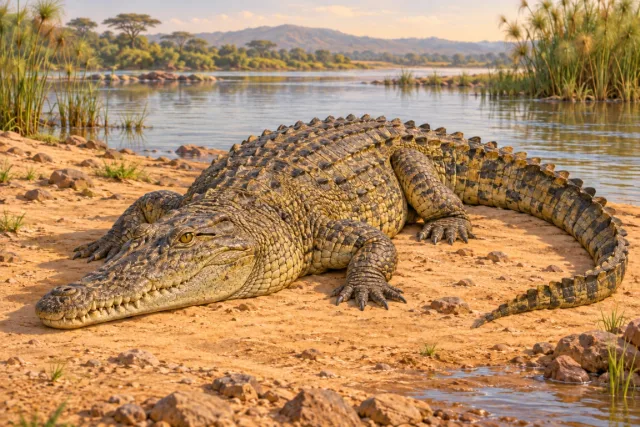 Animal Field Guide
Crocodiles
Crocodiles can hear their babies calling from inside eggs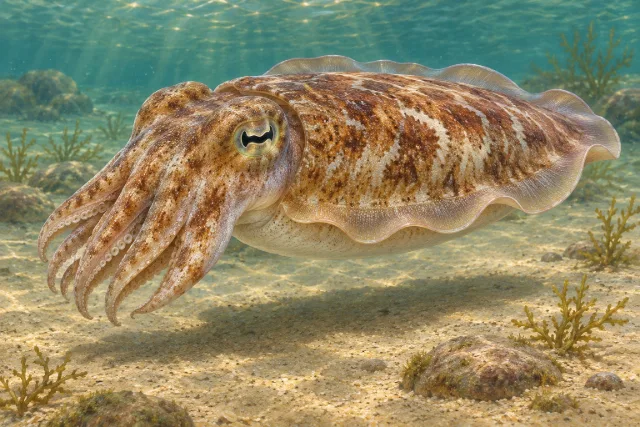 Animal Field Guide
Cuttlefish
Cuttlefish can change their skin’s color, pattern, and texture

Lox says: There are more amazing animals and habitats waiting to meet you!
Grown-Up GuideLearning goals, privacy, standards, sources and more resources
For parents, caregivers & educators
Explore with confidence
This guide explains what children can learn, how the page approaches privacy, and where its groundhog information comes from.
✓ STEM.org Accredited✓ NGSS-aligned learning✓ COPPA-conscious design
Learning goals
Children discover digging claws, growing teeth, winter hibernation, alarm calls, and the value of groundhog burrows.
Try exploring together
- Draw a pretend tunnel system on paper.
- Compare the groundhog’s short tail with a tree squirrel’s tail.
- Talk about hibernation as a winter body slowdown.
Privacy by design
This page uses a data-minimizing, COPPA-conscious approach. It does not ask children for a name, birthdate, email address, account, photo, voice recording, camera, microphone or precise location.
The games work without sign-in, media never autoplays, and embedded videos use YouTube’s privacy-enhanced domain.
Learn about COPPA at the FTC ↗STEM & NGSS connections
Zoobitat’s free wildlife and nature education program has earned the STEM.org Accredited™ Trustmark. This page supports observation, evidence-based discussion and life-science learning.
- 2-LS4-1: Compare the diversity of life in different habitats ↗
- 3-LS4-4: Explain how habitat change affects organisms ↗
Science sources
Groundhog facts were checked against the following wildlife organizations and educational references:
- University of Michigan — Groundhog ↗Species identity, range, total length, mass, daytime activity, plant foods and winter variation.
- Rutgers Cooperative Extension — Groundhog Ecology ↗Digging, continuously growing incisors, mostly solitary adults, wild lifespan and abandoned burrow reuse.
- Missouri Department of Conservation — Woodchuck ↗Grizzled fur, daylight activity and shrill alarm whistles.
- Alaska Department of Fish and Game — Woodchuck ↗Winter torpor, stored fat, northern habitat, Least Concern status and stable trend. Assessment year was not supplied.
- Maryland Department of Natural Resources — Mammal Tracks ↗Four front toes and five hind toes used for anatomical review.
- U.S. Fish and Wildlife Service — Groundhog Facts ↗Short ears and tail, burrow shelter and the limits of Groundhog Day weather folklore.
More from Zoobitat
Keep exploring with free educational resources for families, caregivers and educators:
- Free Wildlife Exhibits Download educational exhibit artwork for zoos, aquariums, schools and community spaces.
- Educator Resources Explore free materials created for classrooms, homeschool learning and family discovery.
- Early Readers Meet wildlife through illustrated, kid-friendly Zoobitat Animal Rescue stories.
- Activity Books Continue learning with wildlife-themed puzzles, activities and creative challenges.
- Zoobitat Expeditions Follow conservation adventures and discover animals and habitats in the field.
- Meet the Hosts Discover the zoos, museums, aquariums and other organizations that have hosted Zoobitat’s free, museum-quality wildlife exhibits.
Media & accessibility record
Character and groundhog visuals are Zoobitat educational assets. Voiceovers require a deliberate play action. Interactive controls have descriptive labels and are keyboard accessible.
Picture credits: Zoobitat Studios, LLC.