
Animal groupInvertebrate
Zoobitat’s Animal Field Guide
Meet the Jumping Spiders
Look closely at a leaf, and you might spot a tiny jumper. Jumping spiders explore their world with eight legs and remarkable eyes.

STEM.org AccreditedEducational wildlife learning for curious explorers ages 4–10
Featured video: The Jumping Spiders
Quick facts
Jumping Spiders Animal File
Scan the essentials, then explore each topic below.
HomeMany habitats around the world
DietMostly small insects and other invertebrates, with diets varying by species
Length0.1 to 2.5 centimeters (0.04 to 1 inch) Across the family, body length excluding legs.
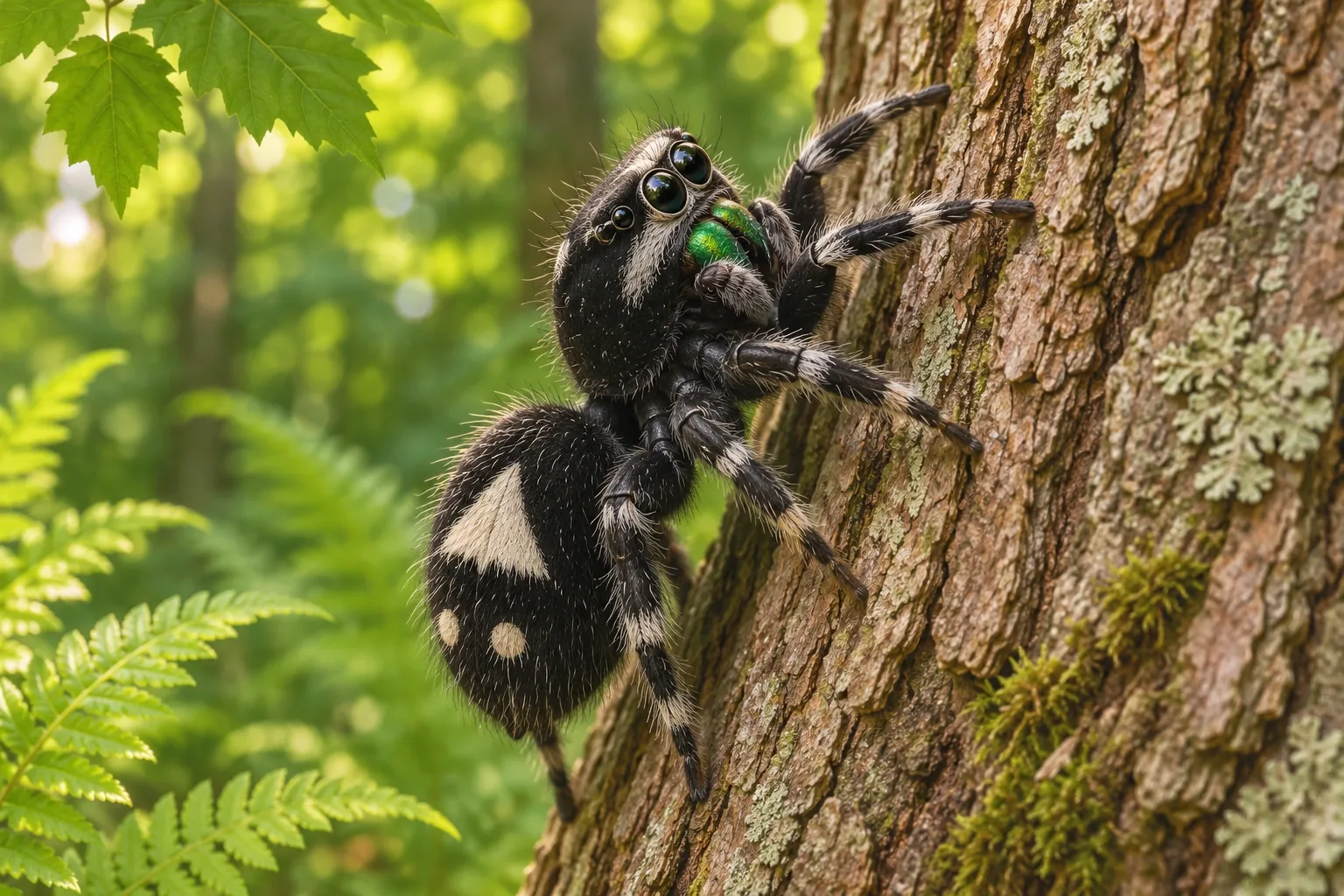
Meet the jumping spiders
Tiny Hunters with Big Eyes
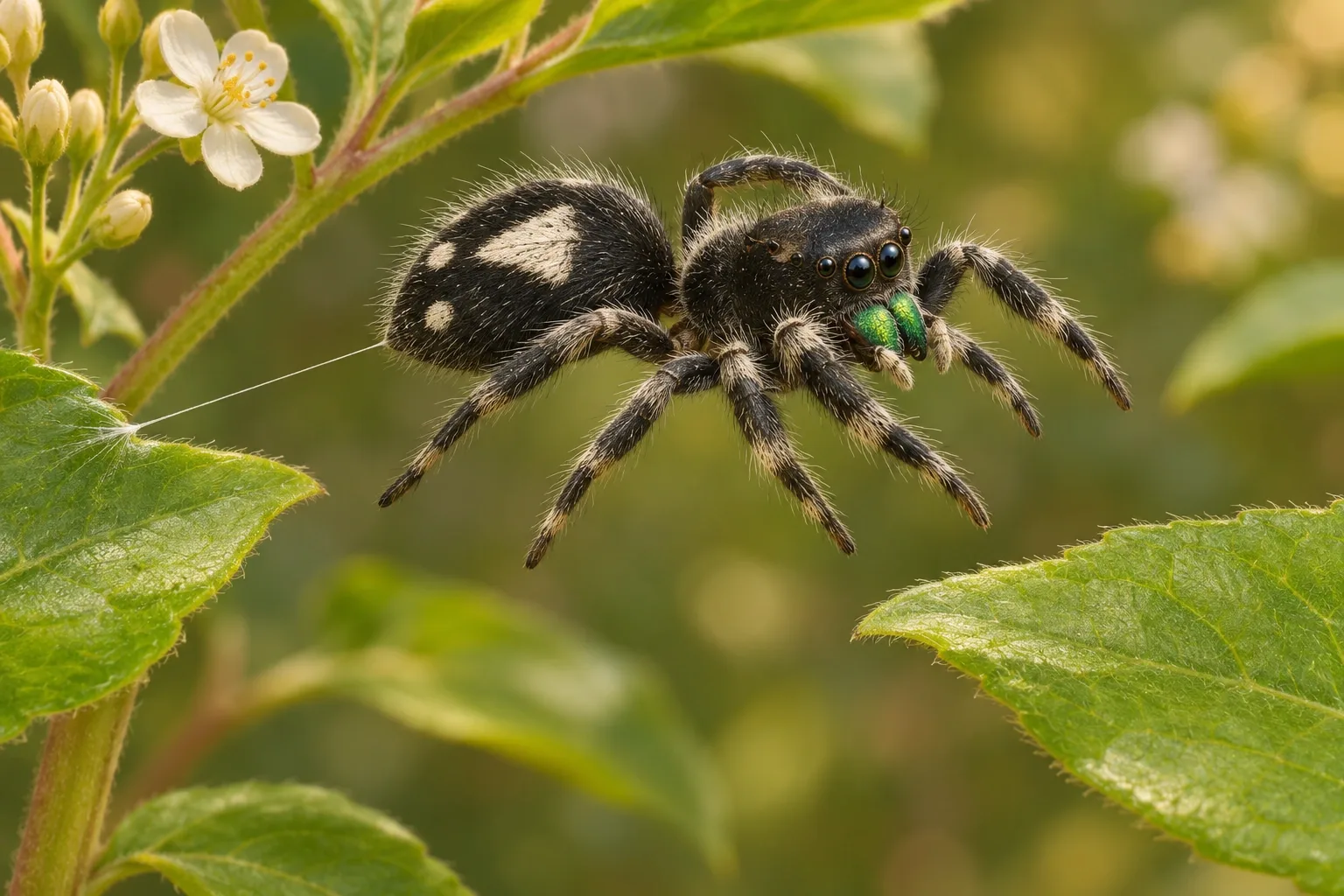
Jumping spiders belong to the spider family Salticidae. They live in many places, including forests, grasslands, and gardens. The artwork here features the North American bold jumping spider.
Across this family, adult bodies measure roughly 1–25 millimeters (0.04–0.98 inches), excluding their legs. Colors, patterns, and body shapes vary among species. Most look for food during the day and live on their own. Body weight varies by species.
Eight Busy Legs
A jumping spider has eight legs and two main body parts. Two short feelers near its mouth are called palps. Palps are different from walking legs.
Eyes That Aim
Jumping spiders have eight eyes. The biggest pair faces forward. Their sharp vision helps them find tiny prey and judge a jump.
A Silk Safety Line
Before a leap, a jumping spider can attach a silk thread. This safety line trails behind as it moves. Silk also helps make sheltered resting places.
A Little Silk Room
At night, many jumping spiders rest inside small silk shelters. These retreats can be tucked among leaves. A spider can also use a retreat while molting as it grows.
Explore its habitats: Boreal Forest · Tropical Rainforest · Mountains · Desert
Watch, listen & learn
Watch, Listen & Learn
Watch, listen and learn about the jumping spider with Zoobitat.
Play & learn
Try the Jumping Spiders Challenge
Color a jumping spider, build a forest and woodland edge habitat, then test what you learned in the quiz.
Try it now
Zoom with +/− or pinch on a touchscreen. Shift-drag to move on desktop.
Color the Jumping Spiders
Fill each area, draw your own details, or erase a change. The jumping spider’s outlines always stay clear.
Try it now
Build a Forest and Woodland Edge Habitat
Drag the stickers anywhere in the landscape.
Habitat builder
Forest and Woodland Edge
Place pangolins where they can reach food and shelter, then add ants, a termite mound, a hollow log and leafy cover.
Try it now
Jumping Spiders Quick Quiz
Use what you learned in Tiny Hunters with Big Eyes. Get all three answers right to unlock your certificate!
0 of 3 correct
Question 1 of 3
1How many walking legs does a jumping spider have?
Your Jumping Spiders CertificateAnswer all three questions correctly, using what you learned above, to unlock it.
Why jumping spiders matter
Small Spiders Matter
Jumping spiders eat small insects and belong to healthy food webs. Plants and natural hiding places help them thrive. Protecting tiny habitats helps many small animals.
- Watch spiders quietly with a grown-up.
- Let fallen leaves remain in a safe garden corner.
- Grow native plants with your family.
- Ask a grown-up about gardening without unnecessary insect sprays.
More From the Animal Field Guide
 Animal Field Guide
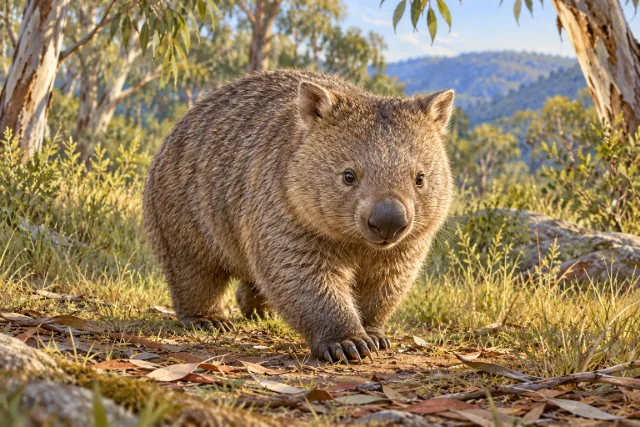
Wombat
A digging mammal with a backward-facing pouch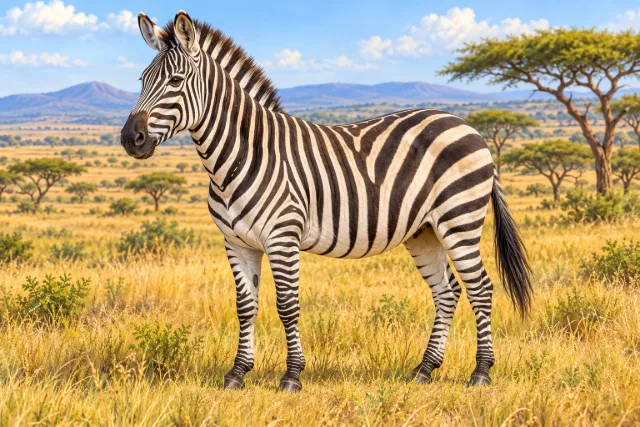 Animal Field Guide
Zebra
Every zebra has its own stripe pattern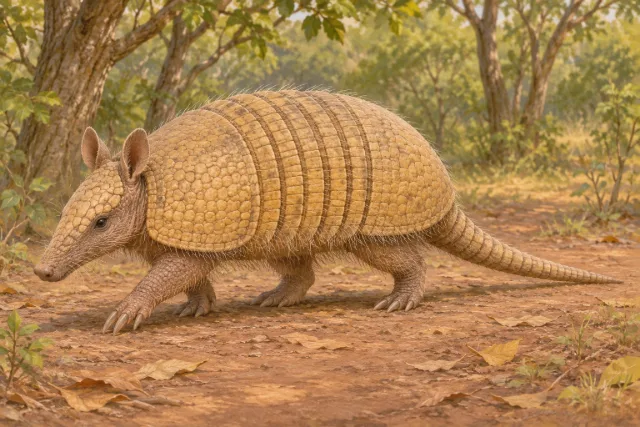 Animal Field Guide
Armadillos
Only three-banded armadillos roll into a complete ball Animal Field Guide
Bald Eagle
An adult bald eagle’s white head is covered in feathers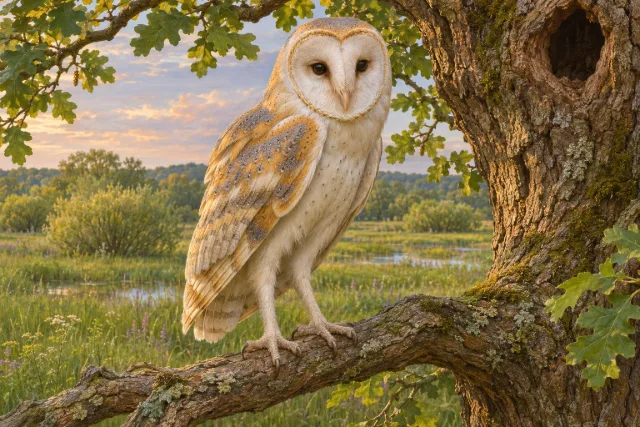 Animal Field Guide
Barn Owl
Its heart-shaped face helps guide sound toward its ears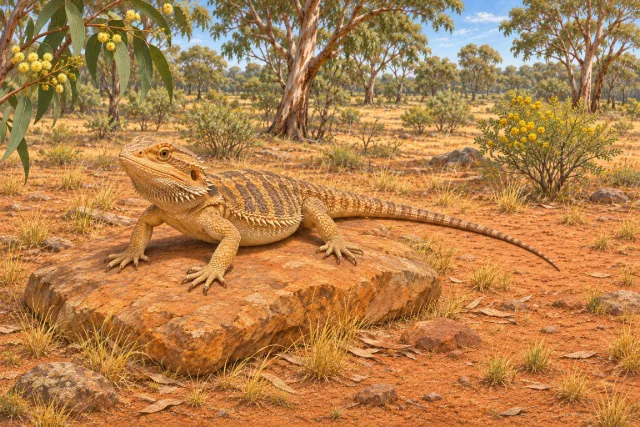 Animal Field Guide
Bearded Dragons
A slow front-leg wave can be a bearded dragon’s body signal Animal Field Guide
Red Fox
Red foxes can listen for tiny animals hidden in grass Animal Field Guide
Red Panda
A fluffy tail helps a red panda balance and stay warm

Lox says: There are more amazing animals and habitats waiting to meet you!
Grown-Up GuideLearning goals, privacy, standards, sources and more resources
For parents, caregivers & educators
Explore with confidence
This guide explains what children can learn, how the page approaches privacy, and where its jumping spider information comes from.
✓ STEM.org Accredited✓ NGSS-aligned learning✓ COPPA-conscious design
Learning goals
Children learn spider anatomy, vision, silk safety lines, daytime activity, and the value of tiny habitats.
Try exploring together
- Count eight legs on the illustration together.
- Compare an insect’s six legs with a spider’s eight.
- Look at leaf shapes without disturbing the animals living there.
Privacy by design
This page uses a data-minimizing, COPPA-conscious approach. It does not ask children for a name, birthdate, email address, account, photo, voice recording, camera, microphone or precise location.
The games work without sign-in, media never autoplays, and embedded videos use YouTube’s privacy-enhanced domain.
Learn about COPPA at the FTC ↗STEM & NGSS connections
Zoobitat’s free wildlife and nature education program has earned the STEM.org Accredited™ Trustmark. This page supports observation, evidence-based discussion and life-science learning.
- 2-LS4-1: Compare the diversity of life in different habitats ↗
- 3-LS4-4: Explain how habitat change affects organisms ↗
Science sources
Jumping Spiders facts were checked against the following wildlife organizations and educational references:
- Australasian Arachnological Society — Salticidae ↗Family body-length range of 1–25 mm, eye arrangement, daylight hunting and diversity.
- University of Kentucky — Jumping Spiders ↗Eight legs, two body parts, eight eyes, life cycle, small insect prey and bold-jumper identification.
- University of Michigan BioKIDS — Salticidae ↗Worldwide terrestrial habitats, solitary behavior, day activity, silk retreats, molting and insect-control role.
- Missouri Department of Conservation — Bold Jumper ↗Featured Phidippus audax markings, green-blue chelicerae, North American habitat and safety silk.
- Australian Museum — Jumping Spiders ↗Daylight hunting, sight, varied habitats, silk retreats and family diversity.
- NSW Environment and Heritage — Spiders in Sydney ↗Spiders’ ecological role, leaf litter and native vegetation habitat, and reduced pesticide use.
More from Zoobitat
Keep exploring with free educational resources for families, caregivers and educators:
- Free Wildlife Exhibits Download educational exhibit artwork for zoos, aquariums, schools and community spaces.
- Educator Resources Explore free materials created for classrooms, homeschool learning and family discovery.
- Early Readers Meet wildlife through illustrated, kid-friendly Zoobitat Animal Rescue stories.
- Activity Books Continue learning with wildlife-themed puzzles, activities and creative challenges.
- Zoobitat Expeditions Follow conservation adventures and discover animals and habitats in the field.
- Meet the Hosts Discover the zoos, museums, aquariums and other organizations that have hosted Zoobitat’s free, museum-quality wildlife exhibits.
Media & accessibility record
Character and jumping spider visuals are Zoobitat educational assets. Voiceovers require a deliberate play action. Interactive controls have descriptive labels and are keyboard accessible.
Picture credits: Zoobitat Studios, LLC.