Animal groupMammal
Zoobitat’s Animal Field Guide
Meet the Ocelot
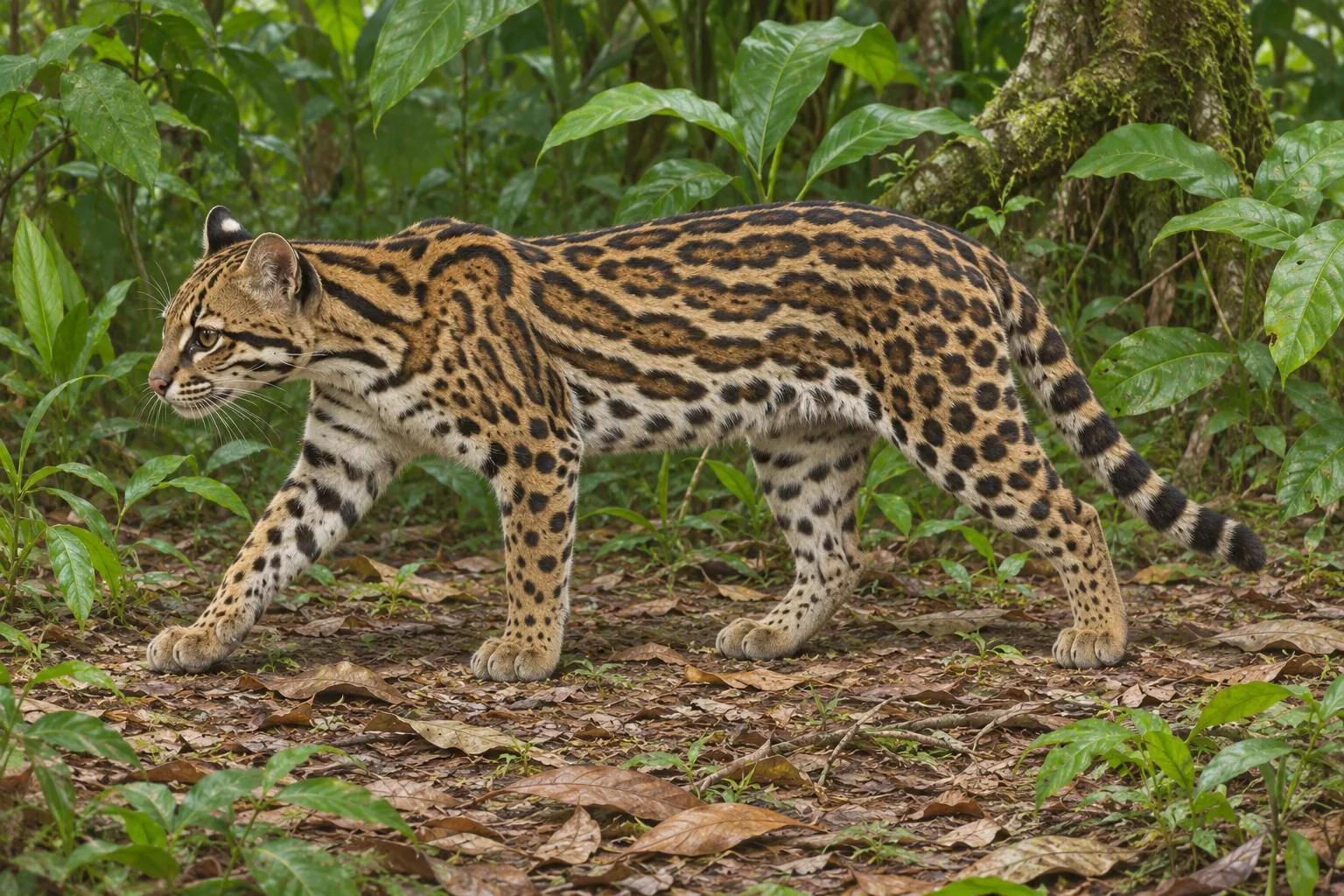
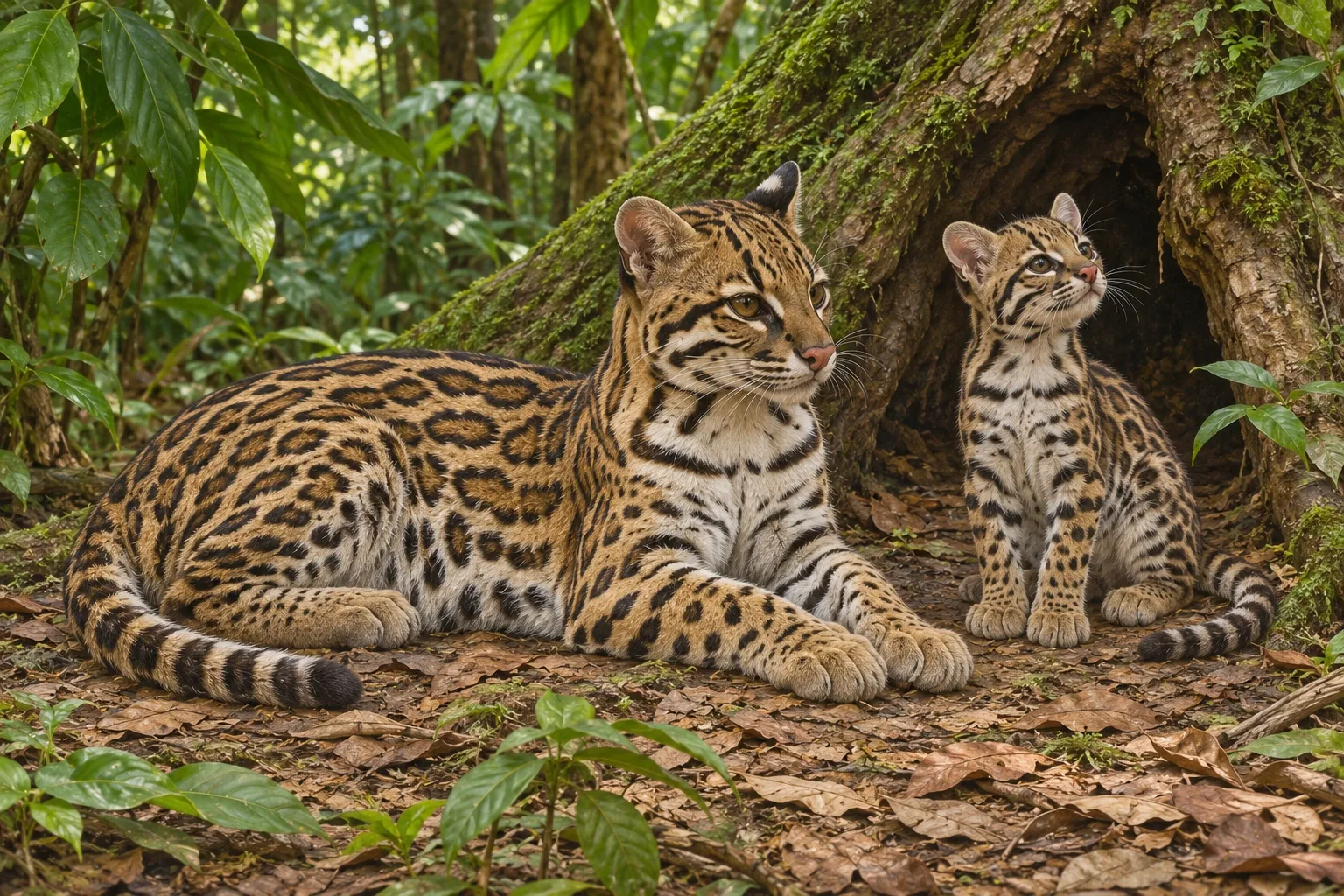
A patterned cat moves through the leafy shadows. The ocelot’s spots and stripes can join into winding chains.

STEM.org AccreditedEducational wildlife learning for curious explorers ages 4–10
Featured video: The Ocelot
Quick facts
Ocelot Animal File
Scan the essentials, then explore each topic below.
HomeSouthern Texas and Mexico through Central America into much of South America
DietMostly small rodents, plus birds, lizards, rabbits, and other animals
Length0.73 to 1 meter (2.4 to 3.3 feet) adult head and body, excluding the 26–41 cm (10–16 inch) tail
ConservationLeast Concern
Get to know ocelots
A Patterned Cat of the Americas
Ocelots live in tropical forests and other places with dense cover. Their range reaches from southern Texas into South America.
An ocelot has rounded ears, sturdy paws, and a ringed tail. It spends much of its time on the ground.
Chains in the Coat
An ocelot has spots, stripes, and rosettes in its coat. Some markings join into chains along its sides.
Exploring After Dark
Ocelots are usually most active at night. They often rest in sheltered places during the day.
A Climbing Cat
Ocelots are powerful climbers. They may climb a tree to find a resting place above the ground.
A Hidden Nursery
A mother ocelot raises her kittens in a sheltered den. She may use a hollow tree, a cave, or a secluded thicket.
Explore its habitat: Tropical Rainforest
Watch, listen & learn
Watch, Listen & Learn
Watch, listen and learn about the ocelot with Zoobitat.
Play & learn
Try an Ocelot Challenge
Color an ocelot, build a tropical rainforest habitat, then test what you learned in the quiz.
Try it now
Zoom with +/− or pinch on a touchscreen. Shift-drag to move on desktop.
Color the Ocelot
Fill each area, draw your own details, or erase a change. The ocelot’s outlines always stay clear.
Try it now
Build a Tropical Rainforest Habitat
Drag the stickers anywhere in the landscape.
Habitat builder
Tropical Rainforest
Place the animals near the food, shelter, water, and perches they might use.
Try it now
Ocelot Quick Quiz
Use what you learned in A Patterned Cat of the Americas. Get all three answers right to unlock your certificate!
0 of 3 correct
Question 1 of 3
1What can an ocelot’s coat markings join into?
Your Ocelot CertificateAnswer all three questions correctly, using what you learned above, to unlock it.
Why ocelots matter
Connect Wild Homes
Ocelots need thick plants and safe routes between habitats. Wildlife crossings can help them travel beneath roads.
- Watch wild animals from a distance with a grown-up.
- Learn how wildlife crossings connect animal habitats.
- Choose forest-friendly paper products with a grown-up.
More From the Animal Field Guide
 Animal Field Guide
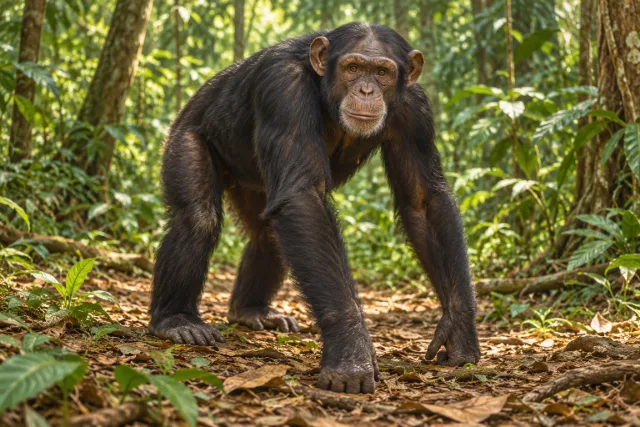
Chimpanzee
Some chimpanzees use slender sticks to gather termites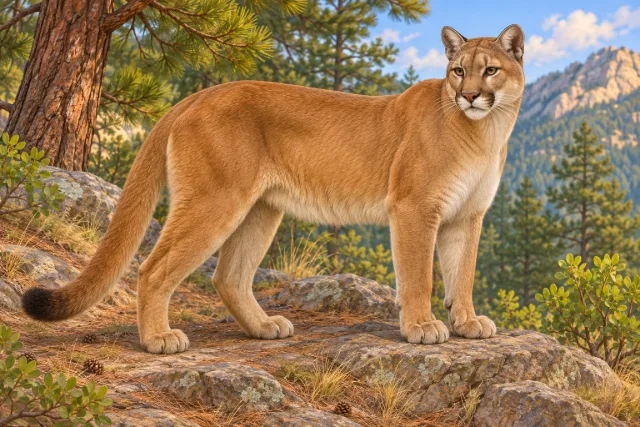 Animal Field Guide
Cougar
Cougar, puma, and mountain lion name the same cat species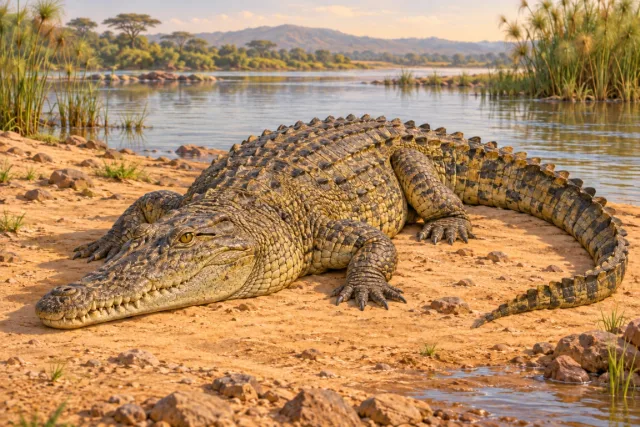 Animal Field Guide
Crocodiles
Crocodiles can hear their babies calling from inside eggs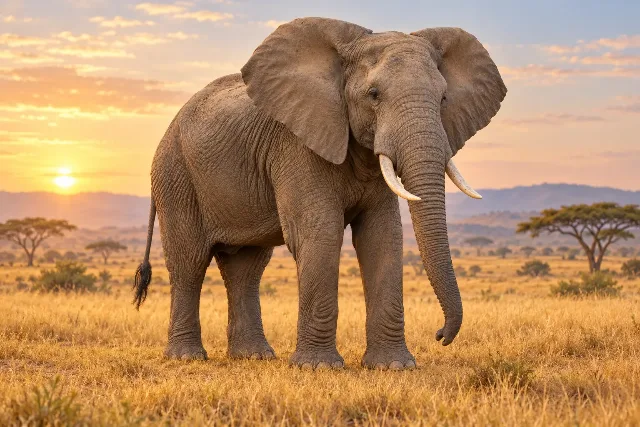 Animal Field Guide
Elephant
A trunk can pick up food and pour water into a mouth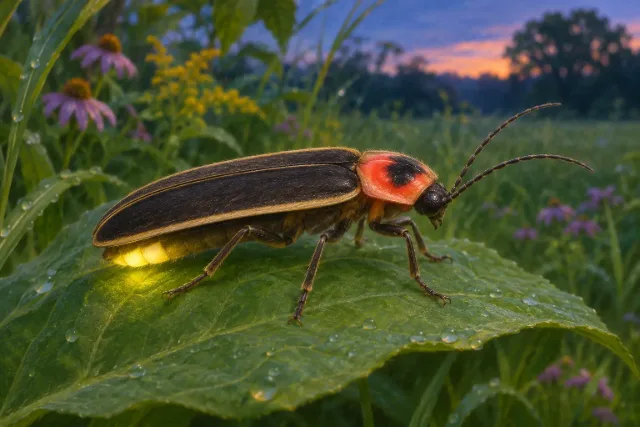 Animal Field Guide
Fireflies
Fireflies are beetles that can make their own light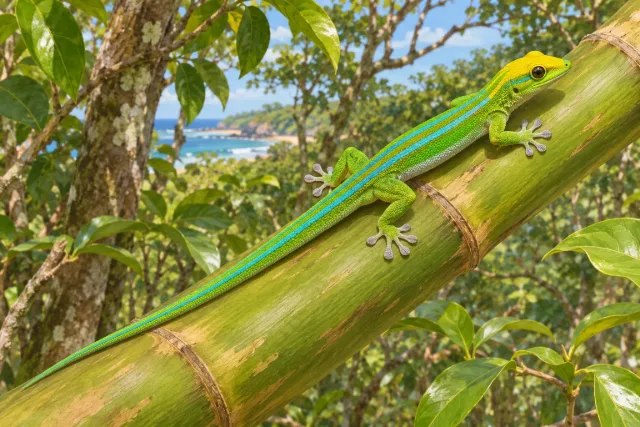 Animal Field Guide
Gecko
Some geckos grip glass with tiny structures on their toes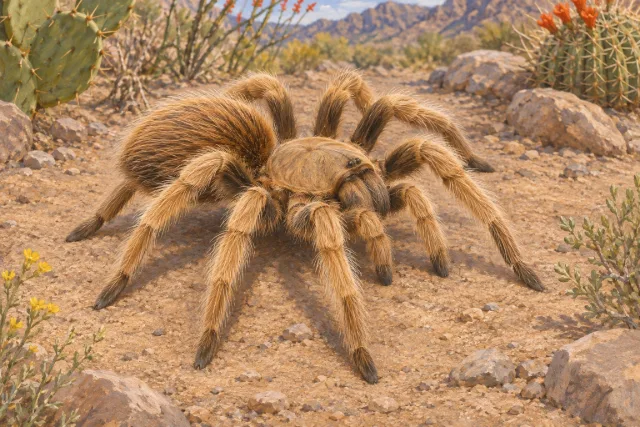 Animal Field Guide
Tarantula
Some tarantulas line their burrows with silk to help hold the soil in place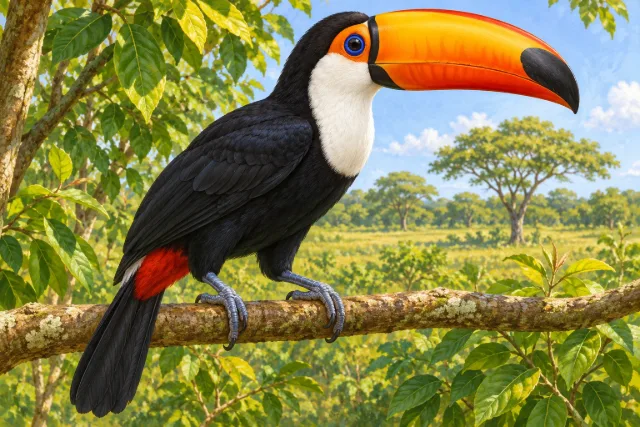 Animal Field Guide
Toucan
A huge bill can be surprisingly light

Lox says: There are more amazing animals and habitats waiting to meet you!
Grown-Up GuideLearning goals, privacy, standards, sources and more resources
For parents, caregivers & educators
Explore with confidence
This guide explains what children can learn, how the page approaches privacy, and where its ocelot information comes from.
✓ STEM.org Accredited✓ NGSS-aligned learning✓ COPPA-conscious design
Learning goals
Recognize ocelot markings and connect nighttime activity, climbing, shelter, and habitat corridors.
Try exploring together
- Trace the chain-like patterns on a paper ocelot.
- Compare an ocelot’s rounded ears with a bobcat’s ear tufts.
- Draw a safe wildlife route between two forest patches.
Privacy by design
This page uses a data-minimizing, COPPA-conscious approach. It does not ask children for a name, birthdate, email address, account, photo, voice recording, camera, microphone or precise location.
The games work without sign-in, media never autoplays, and embedded videos use YouTube’s privacy-enhanced domain.
Learn about COPPA at the FTC ↗STEM & NGSS connections
Zoobitat’s free wildlife and nature education program has earned the STEM.org Accredited™ Trustmark. This page supports observation, evidence-based discussion and life-science learning.
- 2-LS4-1: Compare the diversity of life in different habitats ↗
- 3-LS4-4: Explain how habitat change affects organisms ↗
Science sources
Ocelot facts were checked against the following wildlife organizations and educational references:
- San Diego Zoo Wildlife Alliance ↗Range, adult measurements, diet, forest cover and maternal den care.
- IUCN Cat Specialist Group ↗Chain-like markings, rounded ears, ringed tail, stout legs and large paws.
- San Diego Zoo — Behavior ↗Nocturnal activity, mostly solitary life, ground travel and climbing to rest.
- San Diego Zoo — Conservation ↗Global Least Concern, decreasing trend and 2014 assessment, published in 2015; local populations have stronger protection.
- U.S. Fish and Wildlife Service ↗Habitat connectivity and wildlife underpasses used by ocelots in Texas.
More from Zoobitat
Keep exploring with free educational resources for families, caregivers and educators:
- Free Wildlife Exhibits Download educational exhibit artwork for zoos, aquariums, schools and community spaces.
- Educator Resources Explore free materials created for classrooms, homeschool learning and family discovery.
- Early Readers Meet wildlife through illustrated, kid-friendly Zoobitat Animal Rescue stories.
- Activity Books Continue learning with wildlife-themed puzzles, activities and creative challenges.
- Zoobitat Expeditions Follow conservation adventures and discover animals and habitats in the field.
- Meet the Hosts Discover the zoos, museums, aquariums and other organizations that have hosted Zoobitat’s free, museum-quality wildlife exhibits.
Media & accessibility record
Character and ocelot visuals are Zoobitat educational assets. Voiceovers require a deliberate play action. Interactive controls have descriptive labels and are keyboard accessible.
Picture credits: Zoobitat Studios, LLC.