
Animal groupBird
Zoobitat’s Animal Field Guide
Meet the Peregrine Falcon
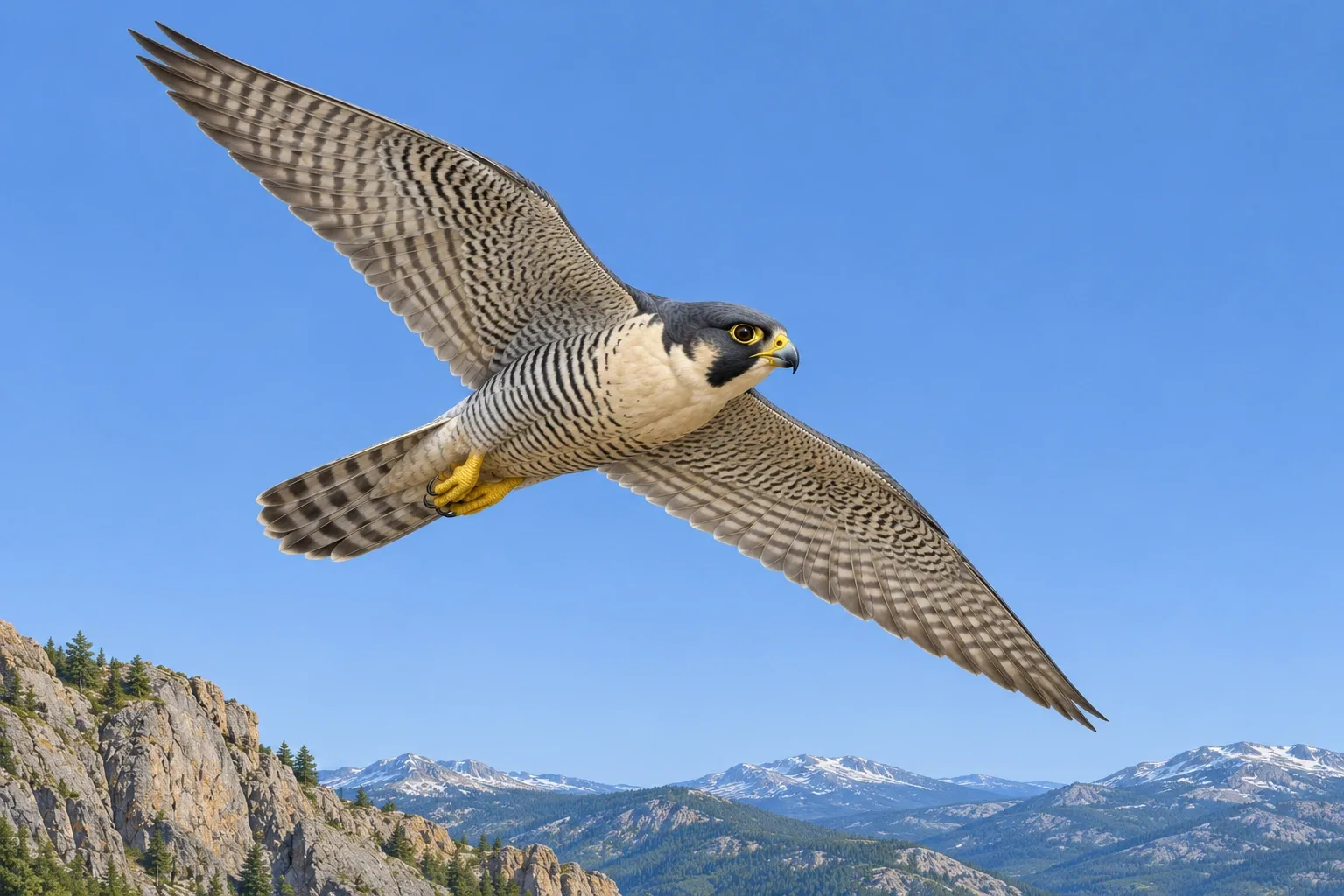
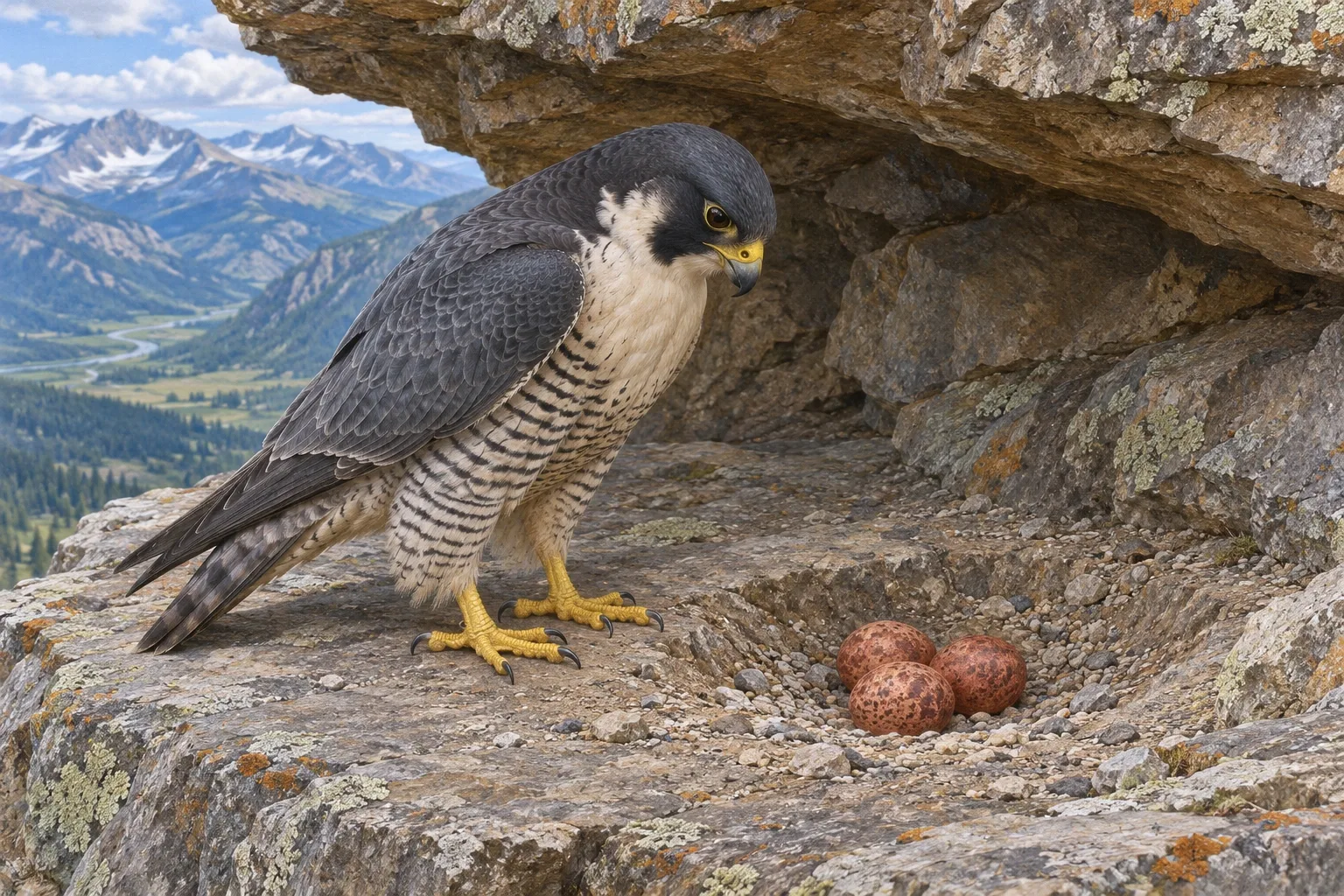
Pointed wings sweep across the sky. The peregrine falcon is a powerful flying bird with a dark cheek patch.

STEM.org AccreditedEducational wildlife learning for curious explorers ages 4–10
Featured video: The Peregrine Falcon
Quick facts
Peregrine Falcon Animal File
Scan the essentials, then explore each topic below.
HomeEvery continent except Antarctica; cliffs, open country, coasts, and some cities
DietMostly small to medium-sized birds, including pigeons, doves, songbirds and shorebirds
Length36 to 59 centimeters (14 to 23 inches) combined reported adult male and female range; females are usually larger
ConservationLeast Concern
Get to know peregrine falcons
A Falcon Built for Flight
Peregrine falcons live on every continent except Antarctica. They use many habitats, including rocky cliffs and open country.
Adults have blue-gray backs and pale undersides with dark bars. Their long, pointed wings and hooked beaks help identify them.
A Fast Dive
A peregrine falcon’s fast hunting dive is called a stoop. It folds its wings closer to its body while diving.
A Simple Nest
Peregrines often nest on cliff ledges. They make a shallow scrape rather than building a large stick nest.
Travelers and Neighbors
Some peregrines migrate long distances between seasons. Others remain near the same area throughout the year.
A Hopeful Comeback
Harmful pesticides once caused peregrine falcons to decline. Pesticide restrictions and conservation work helped many populations recover.
Watch, listen & learn
Watch, Listen & Learn
Watch, listen and learn about the peregrine falcon with Zoobitat.
Play & learn
Try a Peregrine Falcon Challenge
Color a peregrine falcon, build a mountains habitat, then test what you learned in the quiz.
Try it now
Zoom with +/− or pinch on a touchscreen. Shift-drag to move on desktop.
Color the Peregrine Falcon
Fill each area, draw your own details, or erase a change. The peregrine falcon’s outlines always stay clear.
Try it now
Build a Mountains Habitat
Drag the stickers anywhere in the landscape.
Habitat builder
Mountains
Place each animal where it can walk, hide or rest in this summer mountain scene.
Try it now
Peregrine Falcon Quick Quiz
Use what you learned in A Falcon Built for Flight. Get all three answers right to unlock your certificate!
0 of 3 correct
Question 1 of 3
1What is a peregrine falcon’s fast hunting dive called?
Your Peregrine Falcon CertificateAnswer all three questions correctly, using what you learned above, to unlock it.
Why peregrine falcons matter
A Conservation Comeback
Peregrine falcons recovered in many places after people reduced harmful pesticides and protected them. Scientists still watch over their populations.
- Keep away from nesting birds and cliff edges with a grown-up.
- Learn about a local bird conservation project with a grown-up.
- Draw a quiet nesting place and open space for flying.
More From the Animal Field Guide
 Animal Field Guide
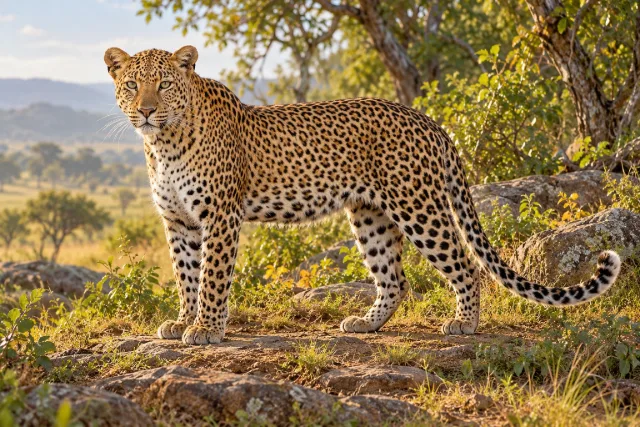
Leopard
A leopard’s flower-shaped markings are called rosettes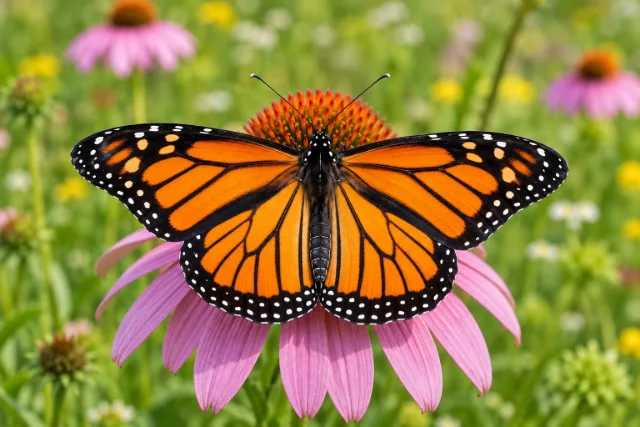 Animal Field Guide
Monarch Butterfly
A monarch grows through four very different life stages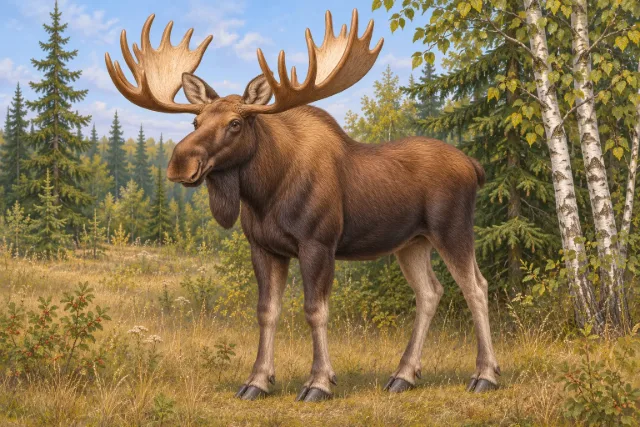 Animal Field Guide
Moose
Moose can swim and eat plants growing in water Animal Field Guide
Polar Bear
Broad paws work like paddles in icy water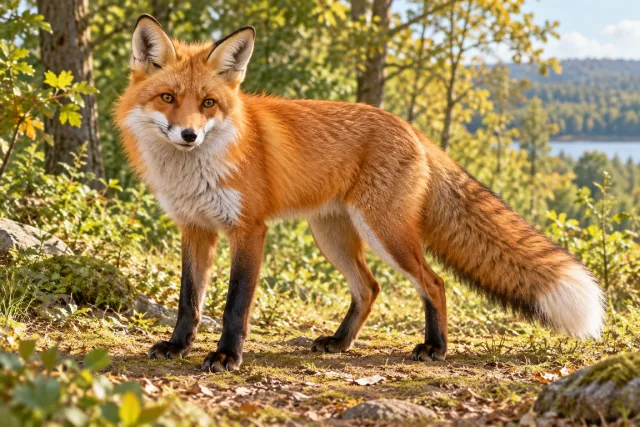 Animal Field Guide
Red Fox
Red foxes can listen for tiny animals hidden in grass Animal Field Guide
Red Panda
A fluffy tail helps a red panda balance and stay warm Animal Field Guide
Brown Bear
A muscular shoulder hump helps brown bears dig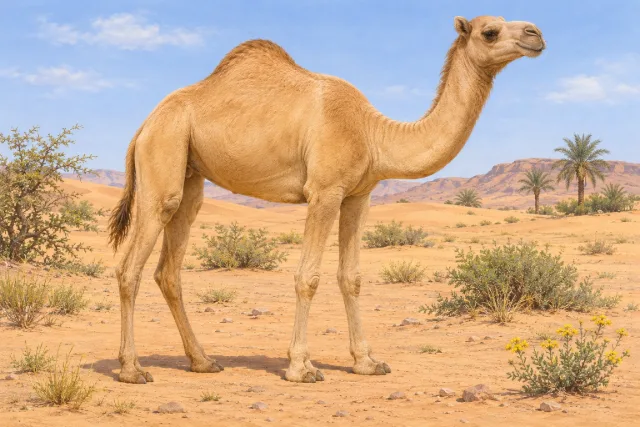 Animal Field Guide
Camels
Camel humps store fat for energy

Lox says: There are more amazing animals and habitats waiting to meet you!
Grown-Up GuideLearning goals, privacy, standards, sources and more resources
For parents, caregivers & educators
Explore with confidence
This guide explains what children can learn, how the page approaches privacy, and where its peregrine falcon information comes from.
✓ STEM.org Accredited✓ NGSS-aligned learning✓ COPPA-conscious design
Learning goals
Recognize adult peregrine markings, distinguish a stoop from ordinary flight, and connect nesting ledges with conservation recovery.
Try exploring together
- Compare an adult’s horizontal belly bars with a young bird’s vertical streaks.
- Use paper wings to explore a glide and a tucked-wing dive.
- Find a conservation comeback story to read together.
Privacy by design
This page uses a data-minimizing, COPPA-conscious approach. It does not ask children for a name, birthdate, email address, account, photo, voice recording, camera, microphone or precise location.
The games work without sign-in, media never autoplays, and embedded videos use YouTube’s privacy-enhanced domain.
Learn about COPPA at the FTC ↗STEM & NGSS connections
Zoobitat’s free wildlife and nature education program has earned the STEM.org Accredited™ Trustmark. This page supports observation, evidence-based discussion and life-science learning.
- 2-LS4-1: Compare the diversity of life in different habitats ↗
- 3-LS4-4: Explain how habitat change affects organisms ↗
Science sources
Peregrine Falcon facts were checked against the following wildlife organizations and educational references:
- Hinterland Who’s Who ↗Adult male and female lengths, hooked beak, pointed wings, cheek patch, horizontal adult bars and vertical juvenile streaks.
- California Department of Fish and Wildlife ↗Adult mass and wingspan ranges, scrape nesting, plumage, bird prey and recovery after pesticide restrictions.
- The Peregrine Fund ↗Fast stoop and wing-tucking, worldwide range, migration differences, pigeons as prey, pairs and cliff nesting.
- BirdLife International — Peregrine Falcon ↗Global assessment 2021: Least Concern, suspected Increasing trend; distinguished from the separate Mediterranean assessment.
More from Zoobitat
Keep exploring with free educational resources for families, caregivers and educators:
- Free Wildlife Exhibits Download educational exhibit artwork for zoos, aquariums, schools and community spaces.
- Educator Resources Explore free materials created for classrooms, homeschool learning and family discovery.
- Early Readers Meet wildlife through illustrated, kid-friendly Zoobitat Animal Rescue stories.
- Activity Books Continue learning with wildlife-themed puzzles, activities and creative challenges.
- Zoobitat Expeditions Follow conservation adventures and discover animals and habitats in the field.
- Meet the Hosts Discover the zoos, museums, aquariums and other organizations that have hosted Zoobitat’s free, museum-quality wildlife exhibits.
Media & accessibility record
Character and peregrine falcon visuals are Zoobitat educational assets. Voiceovers require a deliberate play action. Interactive controls have descriptive labels and are keyboard accessible.
Picture credits: Zoobitat Studios, LLC.