Animal groupInvertebrate
Zoobitat’s Animal Field Guide
Meet the Mantis Shrimps
Two stalked eyes peek across the seabed. Meet the mantis shrimps, sea animals with remarkable folding front limbs.

STEM.org AccreditedEducational wildlife learning for curious explorers ages 4–10
Featured video: The Mantis Shrimps
Quick facts
Mantis Shrimps Animal File
Scan the essentials, then explore each topic below.
HomeMarine seabeds around the world, especially warm coastal waters
DietCrabs, marine snails, fish, and other small sea animals, depending on species
Get to know mantis shrimps
Smashers, Spearers, and Seafloor Shelters
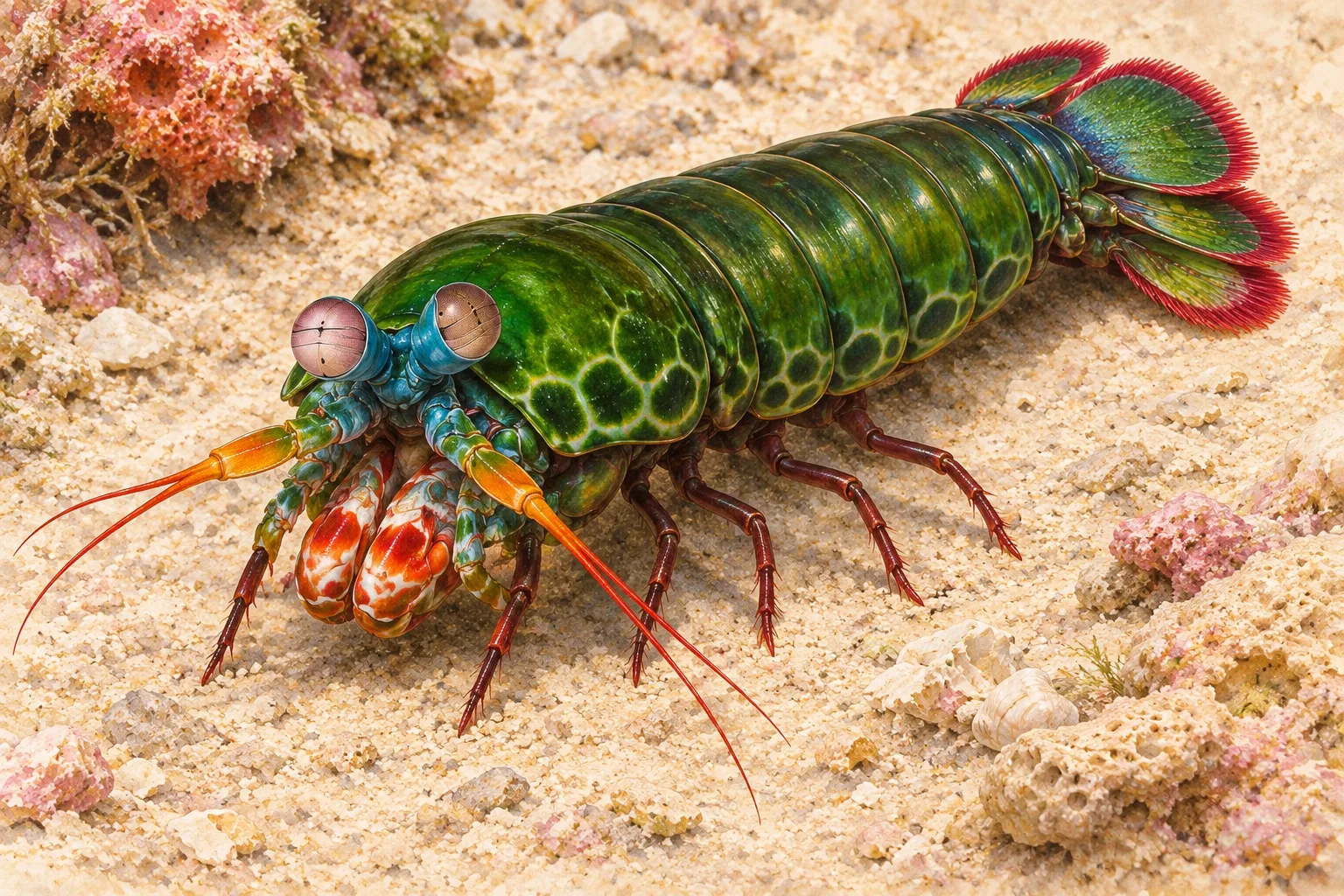
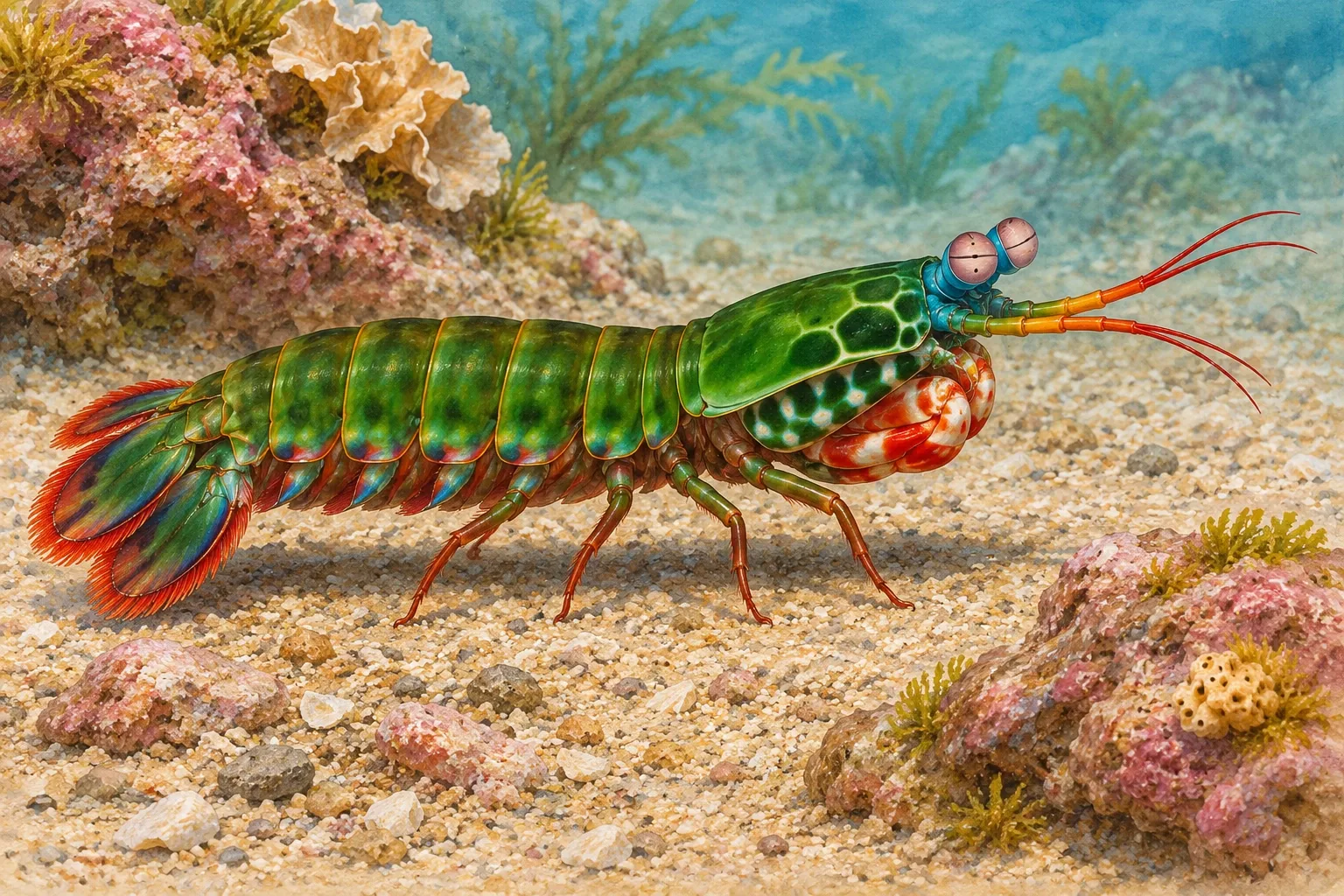
Mantis shrimps are a varied group of marine crustaceans. They include colorful peacock mantis shrimps and striped zebra mantis shrimps.
Peacock mantis shrimps are smashers, while zebra mantis shrimps are spearers. Their special front limbs help them gather different foods. Length and weight vary by species.
Eyes on Stalks
A peacock mantis shrimp has two eyes on stalks. Each eye can move independently as it looks around.
Two Ways to Find Food
Smashers use club-like front limbs to open hard shells. Spearers have spiny front limbs for catching softer prey, such as fish.
A Sheltered Home
Mantis shrimps use burrows and crevices for shelter. A peacock mantis shrimp often rests in a U-shaped burrow near a reef.
Different Neighbors
Most mantis shrimp species live alone. Zebra mantis shrimps can share their home with a partner for life.
Explore its habitats: Coral Reef · Marine
Watch, listen & learn
Watch, Listen & Learn
Watch, listen and learn about the mantis shrimp with Zoobitat.
Play & learn
Try the Mantis Shrimps Challenge
Color a mantis shrimp, build a coral reef habitat, then test what you learned in the quiz.
Try it now
Zoom with +/− or pinch on a touchscreen. Shift-drag to move on desktop.
Color the Mantis Shrimps
Fill each area, draw your own details, or erase a change. The mantis shrimp’s outlines always stay clear.
Try it now
Build a Coral Reef Habitat
Drag the stickers anywhere in the landscape.
Habitat builder
Coral Reef
Choose a sticker to begin building your coral reef.
Try it now
Mantis Shrimps Quick Quiz
Use what you learned in Smashers, Spearers, and Seafloor Shelters. Get all three answers right to unlock your certificate!
0 of 3 correct
Question 1 of 3
1Where are a peacock mantis shrimp’s eyes?
Your Mantis Shrimps CertificateAnswer all three questions correctly, using what you learned above, to unlock it.
Why mantis shrimps matter
Care for Seafloor Homes
Mantis shrimps live in seafloor burrows and crevices. Clean water and healthy habitats help protect these homes.
- Keep litter out of drains and waterways.
- Leave rocks, shells, and sea animals where they belong.
- Learn about reef protection with a grown-up.
More From the Animal Field Guide
 Animal Field Guide
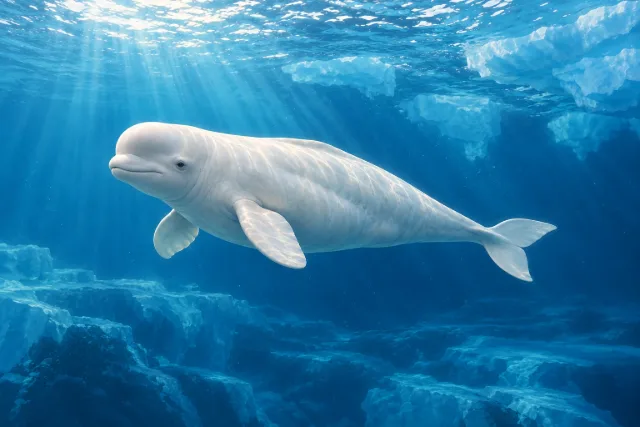
Beluga Whale
A beluga can turn its head from side to side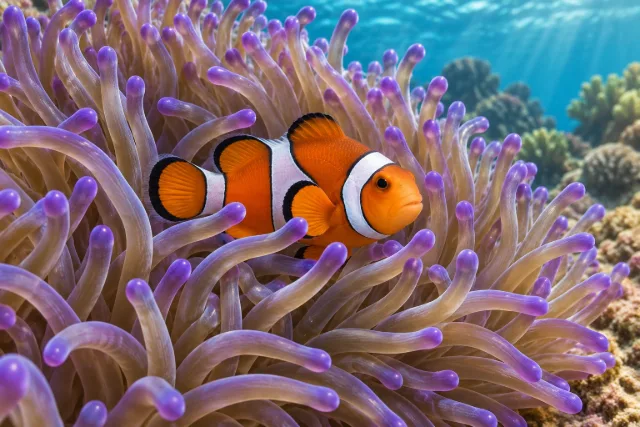 Animal Field Guide
Clownfish
A protective coating helps clownfish live among anemone tentacles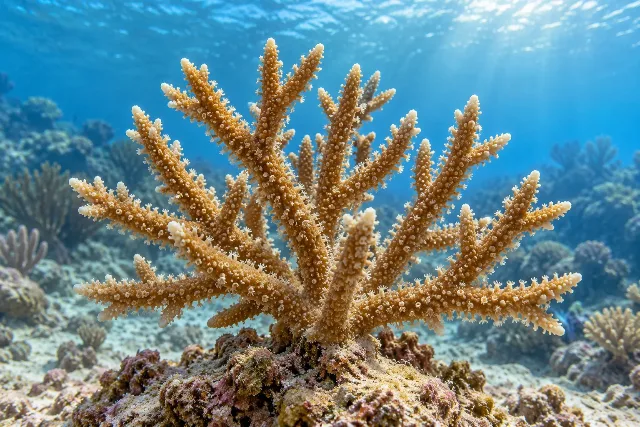 Animal Field Guide
Coral
Corals are animals, and many live together in colonies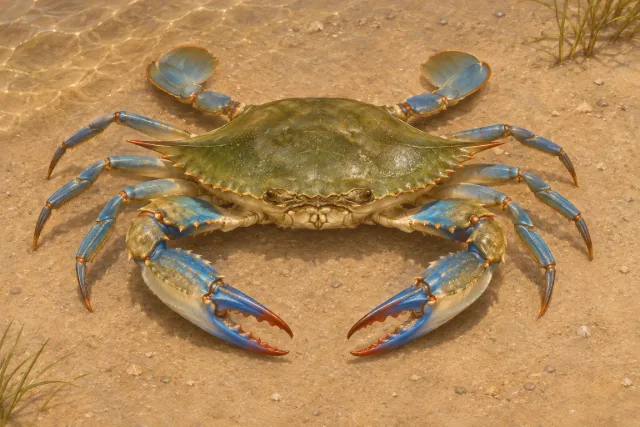 Animal Field Guide
Crabs
A blue crab has flat back legs that work like paddles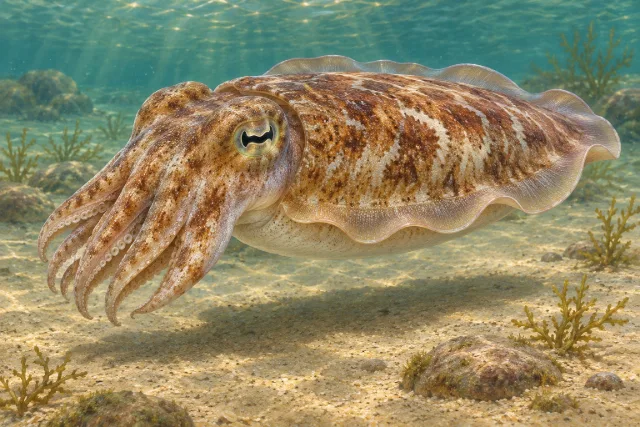 Animal Field Guide
Cuttlefish
Cuttlefish can change their skin’s color, pattern, and texture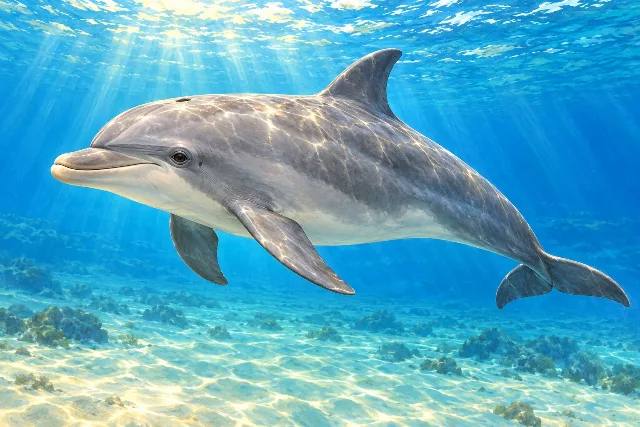 Animal Field Guide
Dolphin
Dolphins breathe air through a blowhole on top of the head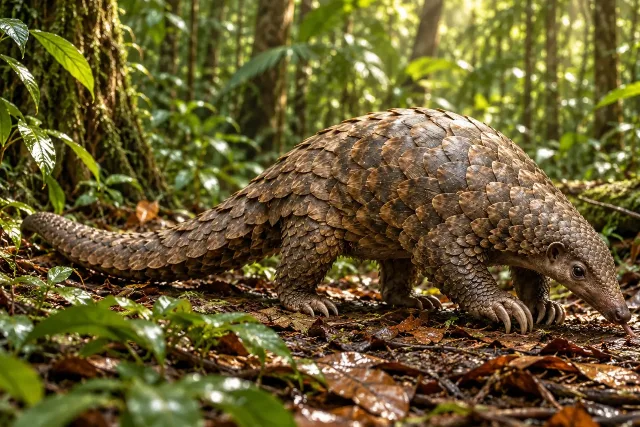 Animal Field Guide
Pangolin
A scaly mammal that eats ants and termites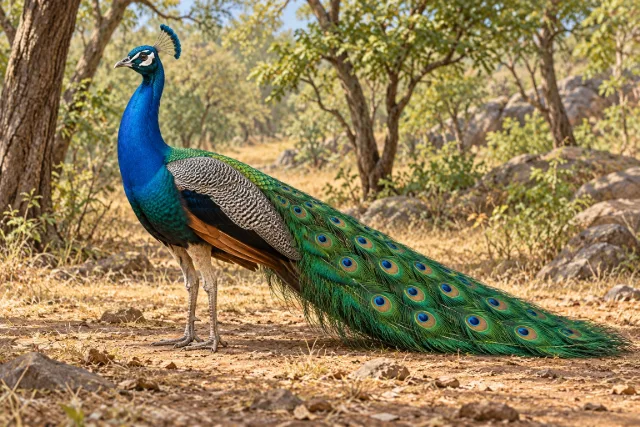 Animal Field Guide
Peacock
A peacock’s long display feathers form a train above its true tail

Lox says: There are more amazing animals and habitats waiting to meet you!
Grown-Up GuideLearning goals, privacy, standards, sources and more resources
For parents, caregivers & educators
Explore with confidence
This guide explains what children can learn, how the page approaches privacy, and where its mantis shrimp information comes from.
✓ STEM.org Accredited✓ NGSS-aligned learning✓ COPPA-conscious design
Learning goals
Compare smasher and spearer adaptations while recognizing that mantis shrimps are marine crustaceans.
Try exploring together
- Compare the peacock and zebra mantis shrimps in the gallery.
- Fold paper limbs to show how a joint can bend.
- Find the Indian and Pacific Oceans on a map.
Privacy by design
This page uses a data-minimizing, COPPA-conscious approach. It does not ask children for a name, birthdate, email address, account, photo, voice recording, camera, microphone or precise location.
The games work without sign-in, media never autoplays, and embedded videos use YouTube’s privacy-enhanced domain.
Learn about COPPA at the FTC ↗STEM & NGSS connections
Zoobitat’s free wildlife and nature education program has earned the STEM.org Accredited™ Trustmark. This page supports observation, evidence-based discussion and life-science learning.
- 2-LS4-1: Compare the diversity of life in different habitats ↗
- 3-LS4-4: Explain how habitat change affects organisms ↗
Science sources
Mantis Shrimps facts were checked against the following wildlife organizations and educational references:
- Queensland Museum ↗Group identity, marine life, smasher and spearer limbs and their different prey.
- National Aquarium ↗Independent eye movements, peacock coloration, Indo-Pacific range and marine-snail prey.
- Animal Diversity Web ↗Peacock limb arrangement, tail fan, U-shaped burrows and solitary behavior. Sanctuary models this featured species.
- Australian Museum ↗Global distribution, seafloor habitats, mostly solitary species and habitat threats.
- Western Australian Museum ↗Zebra species identity, spearer anatomy, paired living and reported length up to 40 cm.
- Natural History Museum ↗Group diversity and contrasting peacock and zebra mantis shrimps. Typical lengths are not group-wide minima.
More from Zoobitat
Keep exploring with free educational resources for families, caregivers and educators:
- Free Wildlife Exhibits Download educational exhibit artwork for zoos, aquariums, schools and community spaces.
- Educator Resources Explore free materials created for classrooms, homeschool learning and family discovery.
- Early Readers Meet wildlife through illustrated, kid-friendly Zoobitat Animal Rescue stories.
- Activity Books Continue learning with wildlife-themed puzzles, activities and creative challenges.
- Zoobitat Expeditions Follow conservation adventures and discover animals and habitats in the field.
- Meet the Hosts Discover the zoos, museums, aquariums and other organizations that have hosted Zoobitat’s free, museum-quality wildlife exhibits.
Media & accessibility record
Character and mantis shrimp visuals are Zoobitat educational assets. Voiceovers require a deliberate play action. Interactive controls have descriptive labels and are keyboard accessible.
Picture credits: Zoobitat Studios, LLC.