Animal groupMammal
Zoobitat’s Animal Field Guide
Meet the Humpback Whale
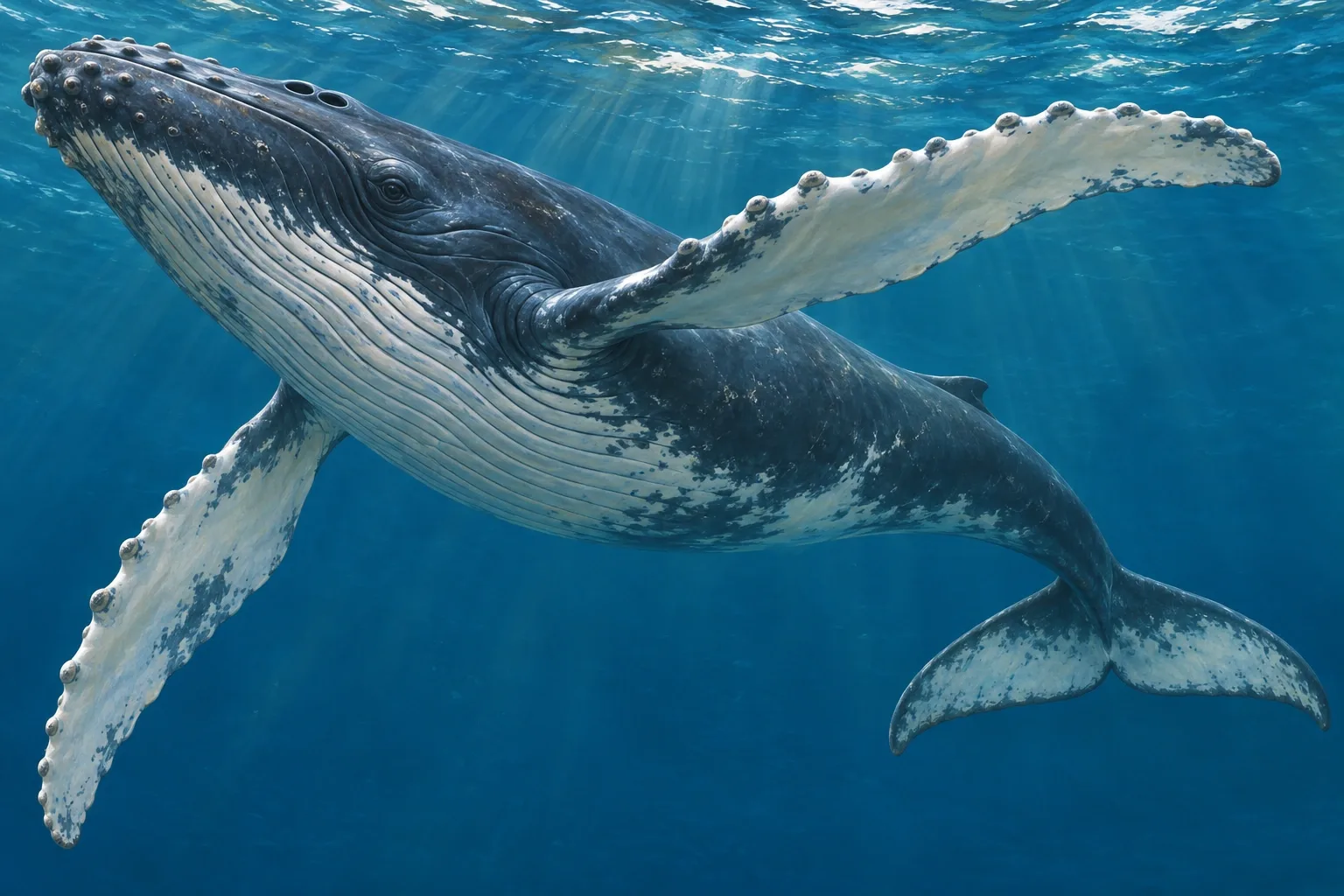
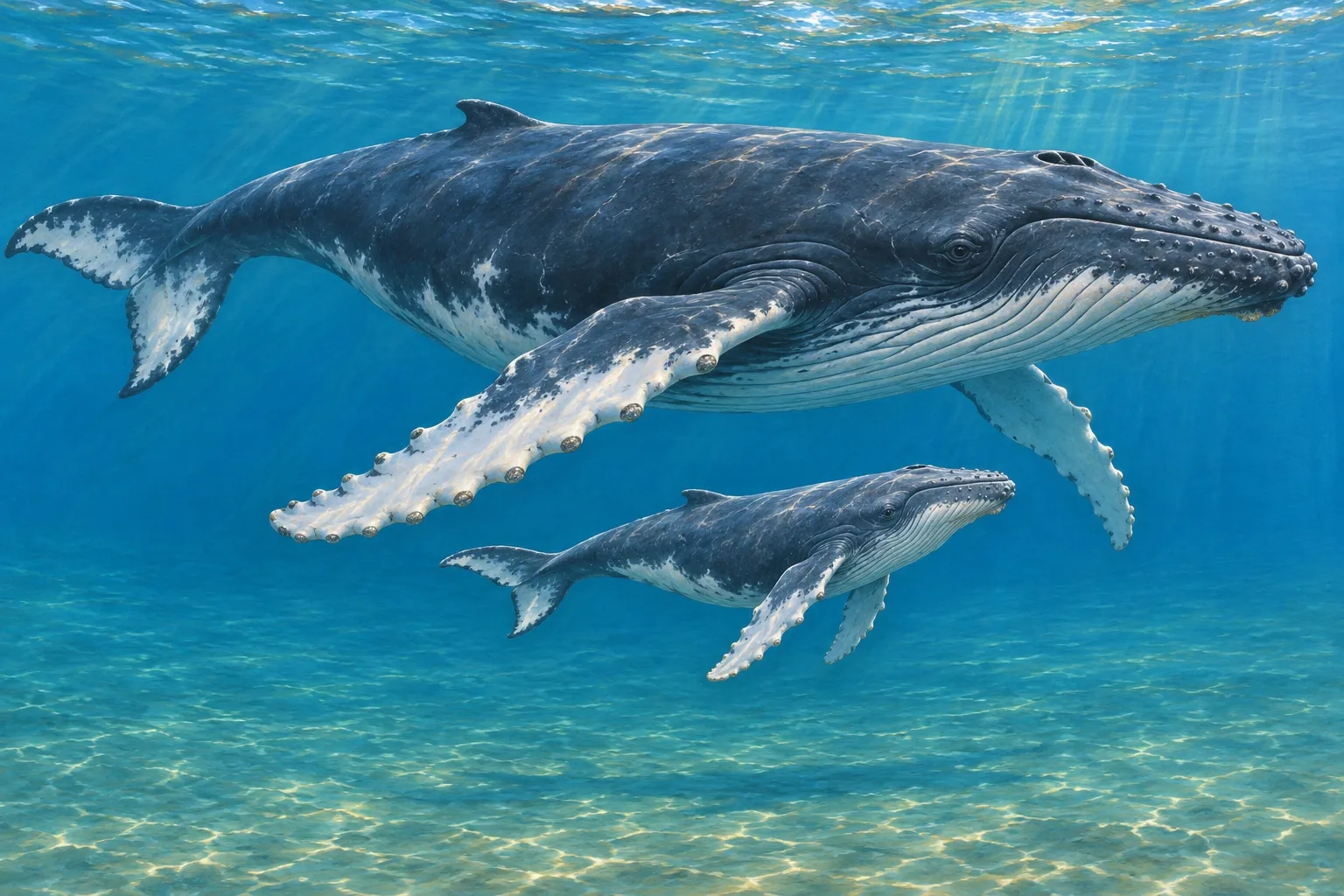
A huge tail rises above the waves. Below the surface, a humpback whale glides through blue water.

STEM.org AccreditedEducational wildlife learning for curious explorers ages 4–10
Featured video: The Humpback Whale
Quick facts
Humpback Whale Animal File
Scan the essentials, then explore each topic below.
HomeOceans worldwide, from tropical breeding waters to cold feeding grounds
DietKrill and small schooling fish
LengthUp to about 18.29 meters (60 feet) up to about 18 meters (60 feet)
ConservationLeast Concern
Get to know humpback whales
A Whale with Big Flippers
Humpback whales live in oceans around the world. Many travel between cool feeding waters and warm places to have calves.
A humpback whale has long flippers and bumps on its head. Its small back fin sits behind a low hump.
Flippers Like Long Wings
A humpback whale has two very long flippers. It uses them to steer and turn through the water.
A Mouth That Strains
A humpback whale has baleen plates in its mouth. These plates strain small fish and krill from seawater.
A Net Made of Bubbles
Some humpback whales work together to blow bubbles around a school of fish. Then they swim up to feed.
A Tail to Recognize
Each humpback whale has its own pattern beneath its tail. Scientists use photographs of these patterns to recognize individual whales.
Explore its habitat: Marine
Watch, listen & learn
Watch, Listen & Learn
Watch, listen and learn about the humpback whale with Zoobitat.
Play & learn
Try a Humpback Whale Challenge
Color a humpback whale, build an open ocean habitat, then test what you learned in the quiz.
Try it now
Zoom with +/− or pinch on a touchscreen. Shift-drag to move on desktop.
Color the Humpback Whale
Fill each area, draw your own details, or erase a change. The humpback whale’s outlines always stay clear.
Try it now
Build an Open Ocean Habitat
Drag the stickers anywhere in the landscape.
Habitat builder
Open Ocean
Choose a sticker to begin building your open ocean.
Try it now
Humpback Whale Quick Quiz
Use what you learned in A Whale with Big Flippers. Get all three answers right to unlock your certificate!
0 of 3 correct
Question 1 of 3
1What helps a humpback whale steer?
Your Humpback Whale CertificateAnswer all three questions correctly, using what you learned above, to unlock it.
Why humpback whales matter
Give Whales Room
Humpback whales need clean seas and room to travel. Loose fishing gear and busy boat routes can cause trouble.
- Watch whales from far away with a grown-up.
- Help a grown-up pick up safe litter near water.
- Share a drawing that shows how whales filter their food.
More From the Animal Field Guide
 Animal Field Guide
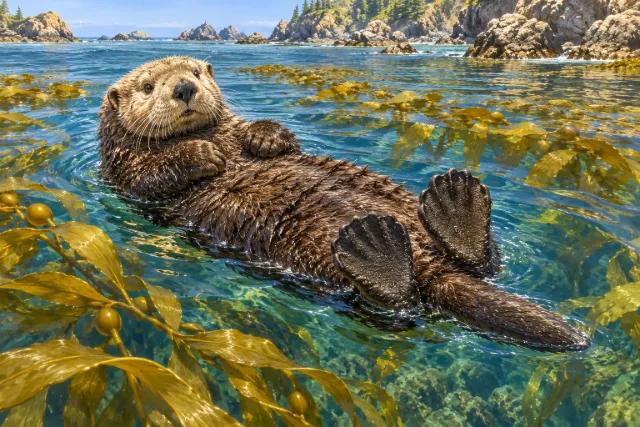
Sea Otter
A sea otter can use a rock to open a shell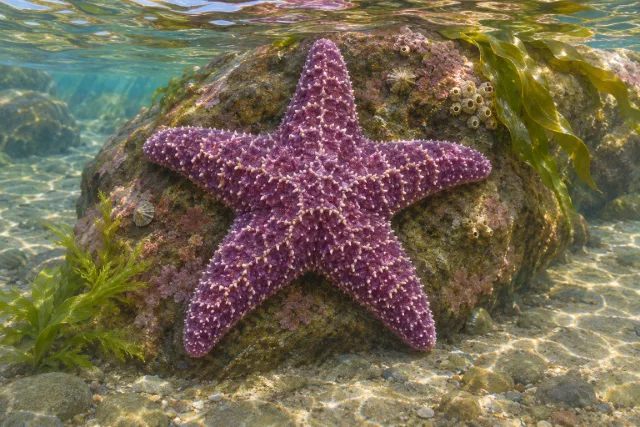 Animal Field Guide
Sea Stars
Sea stars walk on rows of tiny tube feet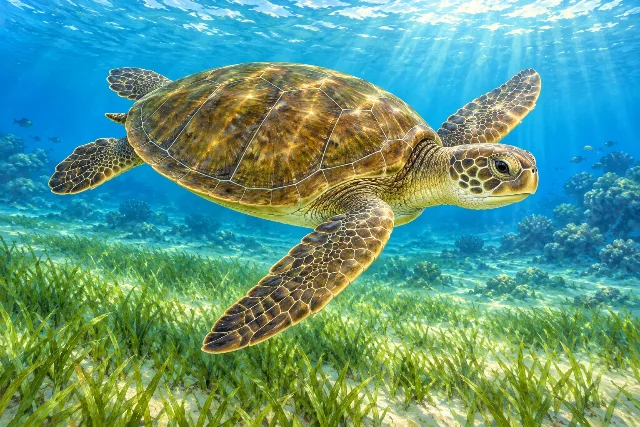 Animal Field Guide
Sea Turtle
Seven living species share the ocean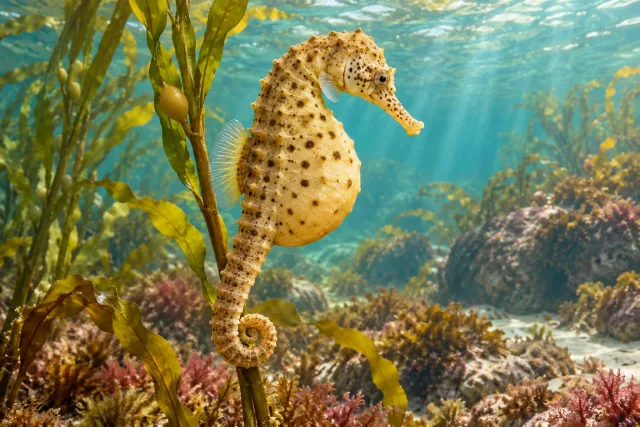 Animal Field Guide
Seahorses
Male seahorses carry developing young in a brood pouch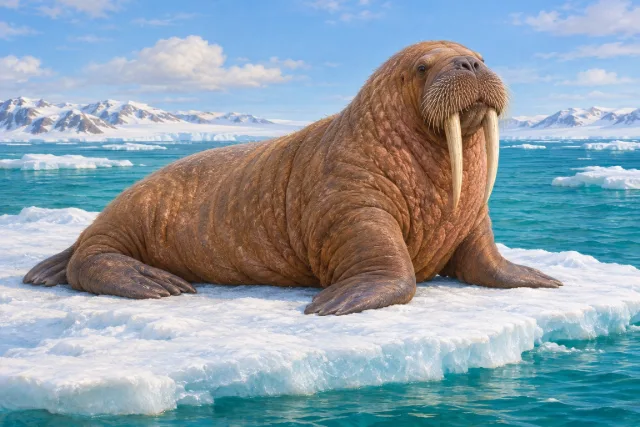 Animal Field Guide
Walrus
Whiskers help walruses find food on the seafloor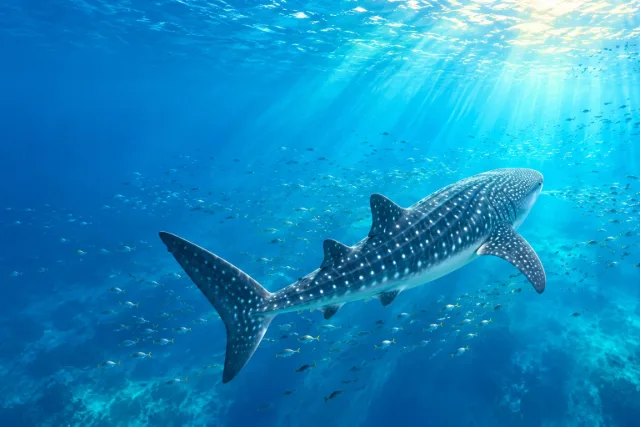 Animal Field Guide
Whale Shark
The largest living fish eats many tiny animals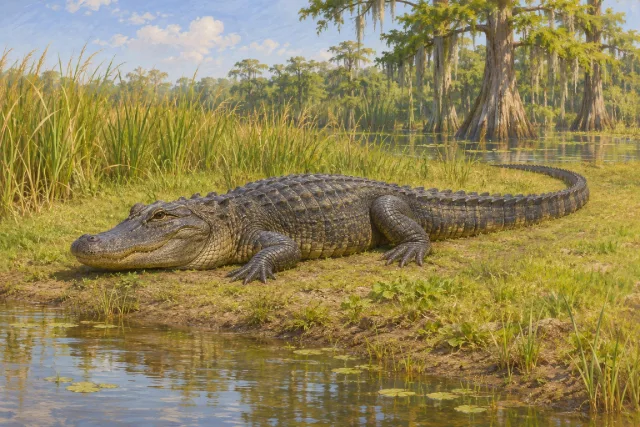 Animal Field Guide
American Alligator
An American alligator has a wide, rounded snout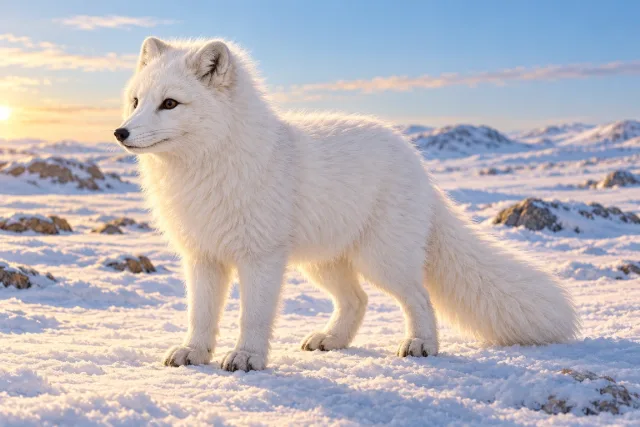 Animal Field Guide
Arctic Fox
An Arctic fox wears furry footwear made from its own coat
Lox says: There are more amazing animals and habitats waiting to meet you!
Grown-Up GuideLearning goals, privacy, standards, sources and more resources
For parents, caregivers & educators
Explore with confidence
This guide explains what children can learn, how the page approaches privacy, and where its humpback whale information comes from.
✓ STEM.org Accredited✓ NGSS-aligned learning✓ COPPA-conscious design
Learning goals
Connect flippers, baleen, and bubbles to how a humpback whale moves and feeds.
Try exploring together
- Spread your arms like long whale flippers.
- Use a kitchen strainer to separate rice from water with a grown-up.
- Trace a whale’s trip between warm and cool seas on a map.
Privacy by design
This page uses a data-minimizing, COPPA-conscious approach. It does not ask children for a name, birthdate, email address, account, photo, voice recording, camera, microphone or precise location.
The games work without sign-in, media never autoplays, and embedded videos use YouTube’s privacy-enhanced domain.
Learn about COPPA at the FTC ↗STEM & NGSS connections
Zoobitat’s free wildlife and nature education program has earned the STEM.org Accredited™ Trustmark. This page supports observation, evidence-based discussion and life-science learning.
- 2-LS4-1: Compare the diversity of life in different habitats ↗
- 3-LS4-4: Explain how habitat change affects organisms ↗
Science sources
Humpback Whale facts were checked against the following wildlife organizations and educational references:
- NOAA Fisheries ↗Range, baleen, anatomy, size maxima, calf care, threats and tail identification.
- Alaska Department of Fish and Game ↗Long flippers, herring and cooperative bubble-net behavior.
- IUCN SSC Cetacean Specialist Group ↗Global Least Concern assessment. Individual populations have different risk levels.
- SeaLifeBase ↗2018 global assessment date.
More from Zoobitat
Keep exploring with free educational resources for families, caregivers and educators:
- Free Wildlife Exhibits Download educational exhibit artwork for zoos, aquariums, schools and community spaces.
- Educator Resources Explore free materials created for classrooms, homeschool learning and family discovery.
- Early Readers Meet wildlife through illustrated, kid-friendly Zoobitat Animal Rescue stories.
- Activity Books Continue learning with wildlife-themed puzzles, activities and creative challenges.
- Zoobitat Expeditions Follow conservation adventures and discover animals and habitats in the field.
- Meet the Hosts Discover the zoos, museums, aquariums and other organizations that have hosted Zoobitat’s free, museum-quality wildlife exhibits.
Media & accessibility record
Character and humpback whale visuals are Zoobitat educational assets. Voiceovers require a deliberate play action. Interactive controls have descriptive labels and are keyboard accessible.
Picture credits: Zoobitat Studios, LLC.