Animal groupFish
Zoobitat’s Animal Field Guide
Meet the Basking Shark
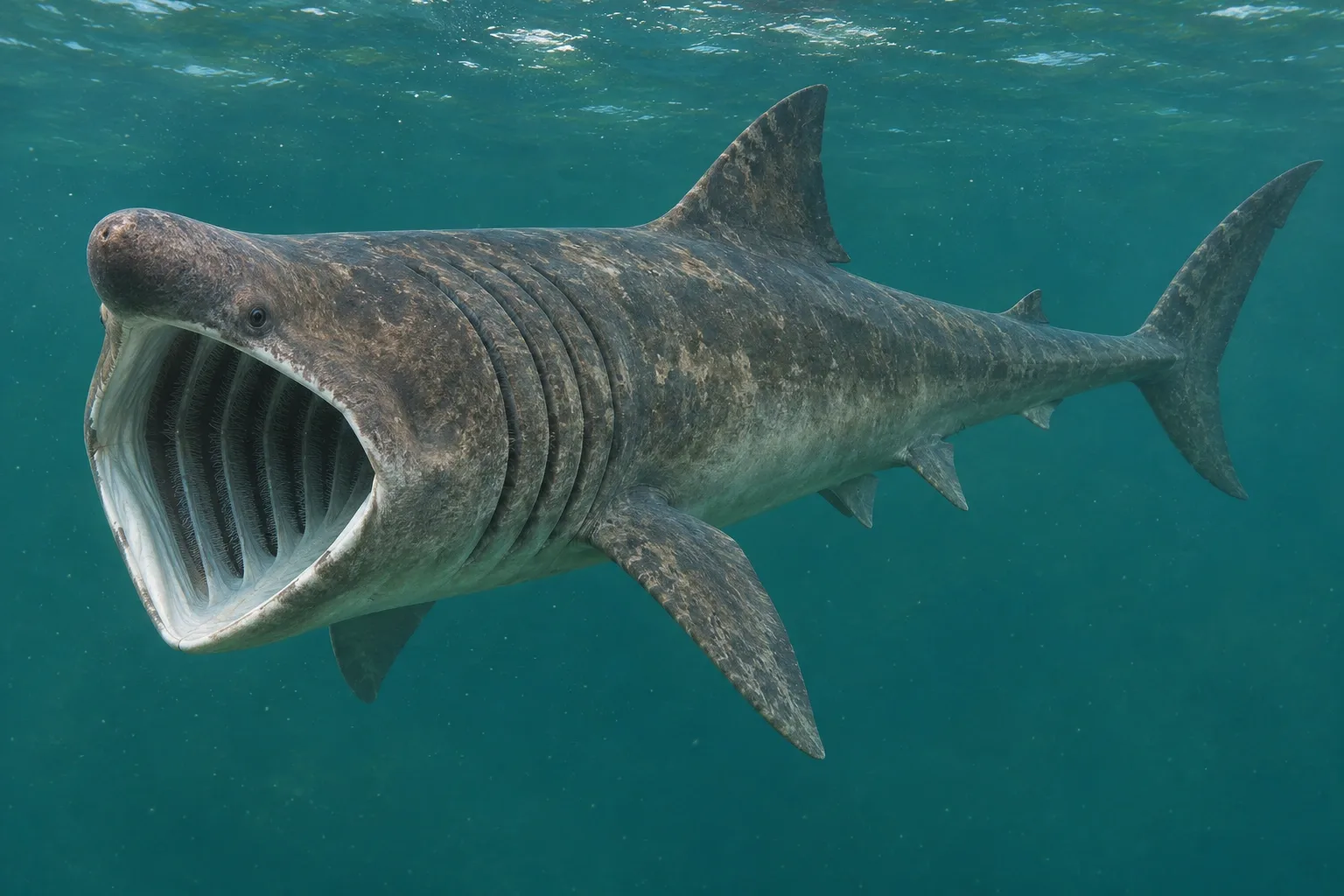
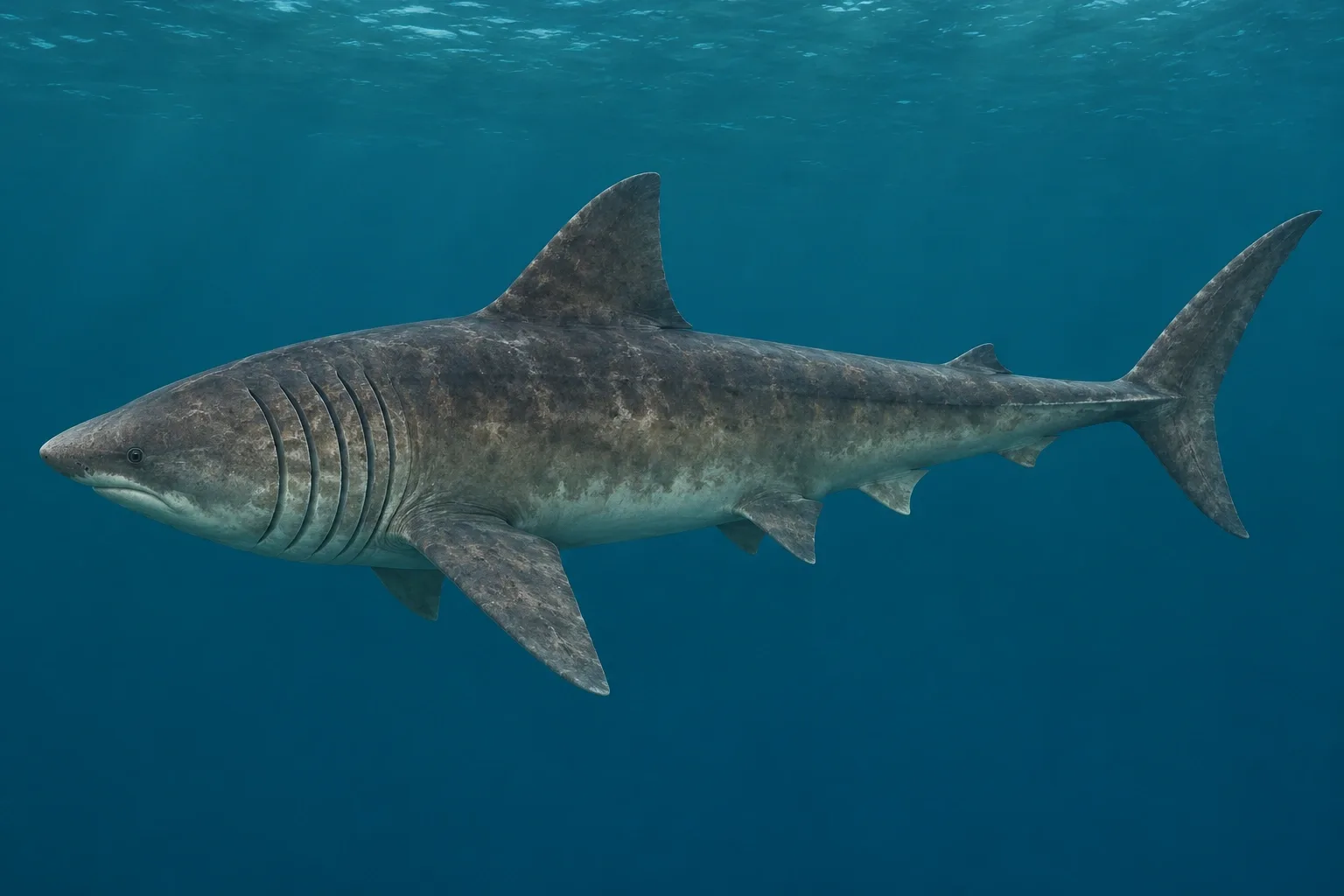
A huge mouth opens beneath the waves. This basking shark is collecting tiny drifting animals from seawater.

STEM.org AccreditedEducational wildlife learning for curious explorers ages 4–10
Featured video: The Basking Shark
Quick facts
Basking Shark Animal File
Scan the essentials, then explore each topic below.
HomeTemperate coastal seas and offshore waters around the world
DietZooplankton, especially copepods and other tiny crustaceans, plus fish eggs and larvae
LengthUp to about 12 meters (39 feet) reported upper size; most adults are smaller
ConservationEndangered
Get to know basking sharks
A Giant with Tiny Meals
The basking shark is the world’s second-largest living fish. Only the whale shark grows larger.
It has a conical snout and a crescent-shaped tail. Huge gill slits nearly circle its head.
A Very Large Fish
The basking shark is the world’s second-largest living fish. Only the whale shark grows larger.
Filtering a Meal
Basking sharks eat tiny drifting animals called zooplankton. Gill rakers trap food as water passes through their mouths and gills.
Ocean Journeys
Basking sharks travel between feeding areas. Some have crossed the Atlantic Ocean, showing how far their journeys can reach.
Near the Surface
Basking sharks often feed near the surface when plankton is plentiful. Their slow surface swimming helped give them their name.
Explore its habitat: Marine
Watch, listen & learn
Watch, Listen & Learn
Watch, listen and learn about the basking shark with Zoobitat.
Play & learn
Try a Basking Shark Challenge
Color a basking shark, build an open ocean habitat, then test what you learned in the quiz.
Try it now
Zoom with +/− or pinch on a touchscreen. Shift-drag to move on desktop.
Color the Basking Shark
Fill each area, draw your own details, or erase a change. The basking shark’s outlines always stay clear.
Try it now
Build an Open Ocean Habitat
Drag the stickers anywhere in the landscape.
Habitat builder
Open Ocean
Choose a sticker to begin building your open ocean.
Try it now
Basking Shark Quick Quiz
Use what you learned in A Giant with Tiny Meals. Get all three answers right to unlock your certificate!
0 of 3 correct
Question 1 of 3
1Which fish grows larger than a basking shark?
Your Basking Shark CertificateAnswer all three questions correctly, using what you learned above, to unlock it.
Why basking sharks matter
Room for Ocean Travelers
Basking sharks need healthy seas and safe travel routes. Fishing gear and boat collisions can harm these large ocean animals.
- Learn about a marine protected area with a grown-up.
- Keep plastic litter away from drains and waterways.
- Watch ocean wildlife from a distance with a grown-up.
More From the Animal Field Guide
 Animal Field Guide
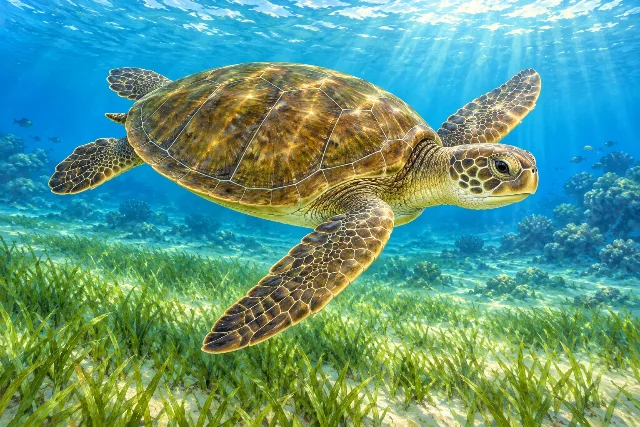
Sea Turtle
Seven living species share the ocean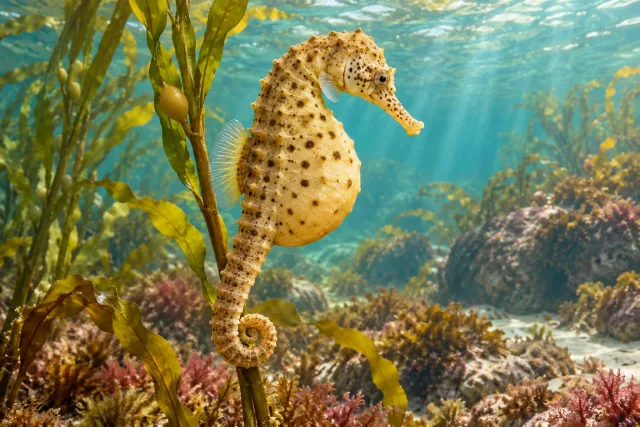 Animal Field Guide
Seahorses
Male seahorses carry developing young in a brood pouch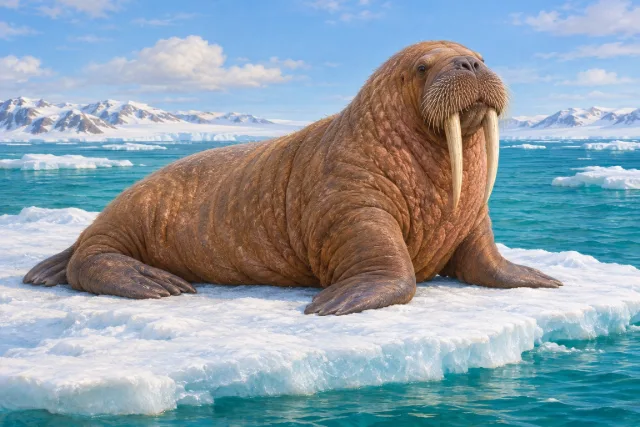 Animal Field Guide
Walrus
Whiskers help walruses find food on the seafloor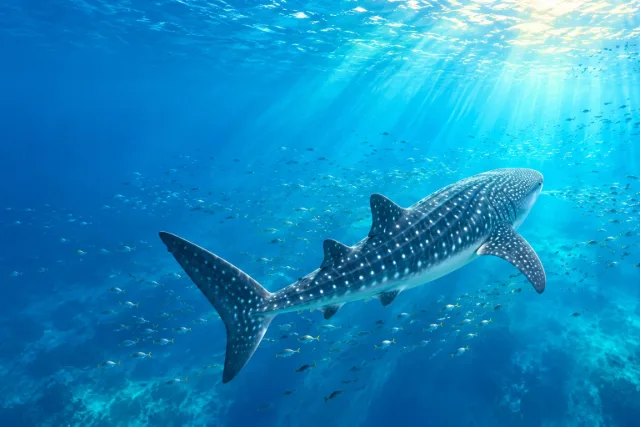 Animal Field Guide
Whale Shark
The largest living fish eats many tiny animals Animal Field Guide
Bald Eagle
An adult bald eagle’s white head is covered in feathers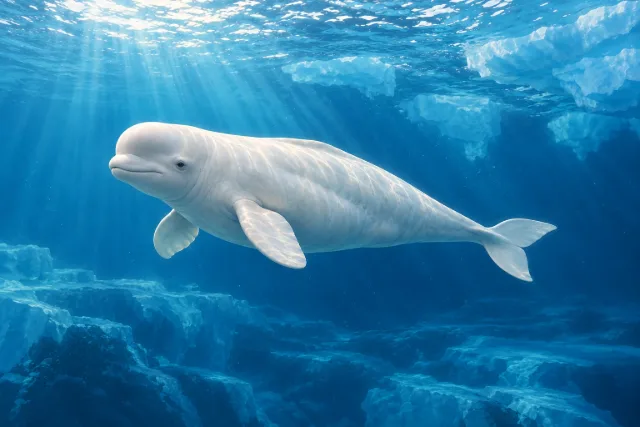 Animal Field Guide
Beluga Whale
A beluga can turn its head from side to side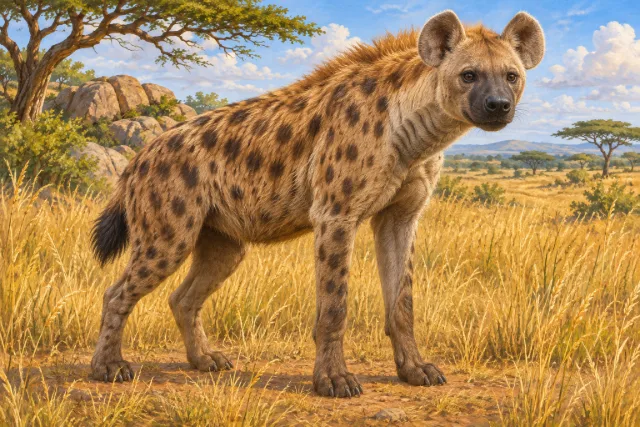 Animal Field Guide
Spotted Hyena
A whoop helps clan members find one another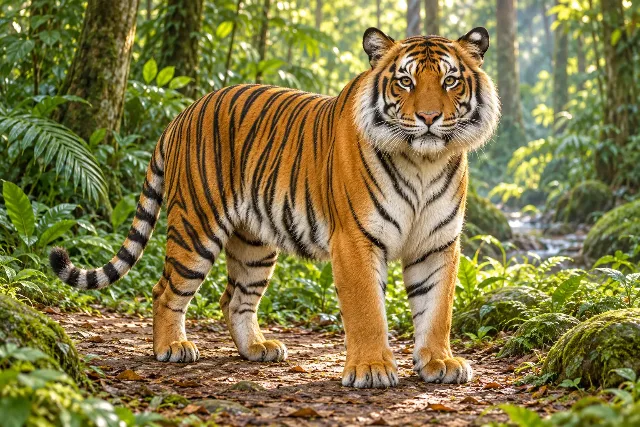 Animal Field Guide
Sumatran Tiger
Every tiger has its own stripe pattern
Lox says: There are more amazing animals and habitats waiting to meet you!
Grown-Up GuideLearning goals, privacy, standards, sources and more resources
For parents, caregivers & educators
Explore with confidence
This guide explains what children can learn, how the page approaches privacy, and where its basking shark information comes from.
✓ STEM.org Accredited✓ NGSS-aligned learning✓ COPPA-conscious design
Learning goals
Connect enormous shark size with tiny zooplankton meals, filtering gills, seasonal movements, and ocean protection.
Try exploring together
- Compare the basking shark’s gill slits with a whale shark’s.
- Draw a giant shark beside a tiny copepod with a magnifying circle.
- Trace a possible ocean journey on a map.
Privacy by design
This page uses a data-minimizing, COPPA-conscious approach. It does not ask children for a name, birthdate, email address, account, photo, voice recording, camera, microphone or precise location.
The games work without sign-in, media never autoplays, and embedded videos use YouTube’s privacy-enhanced domain.
Learn about COPPA at the FTC ↗STEM & NGSS connections
Zoobitat’s free wildlife and nature education program has earned the STEM.org Accredited™ Trustmark. This page supports observation, evidence-based discussion and life-science learning.
- 2-LS4-1: Compare the diversity of life in different habitats ↗
- 3-LS4-4: Explain how habitat change affects organisms ↗
Science sources
Basking Shark facts were checked against the following wildlife organizations and educational references:
- Florida Museum of Natural History ↗Second-largest fish, conical snout, crescent tail and huge gill slits. Older conservation text is superseded by IUCN.
- Fisheries and Oceans Canada ↗Gill raker feeding on copepods and other zooplankton, range, solitary swimming or temporary groups, threats.
- NatureScot — Basking Shark Report ↗Seasonal migrations and documented Atlantic crossings; global Endangered and Decreasing, assessment November 2018.
- Natural History Museum ↗Reported maximum length 12 m and mass 6,000 kg, surface feeding and origin of common name. Reproduction is not used here.
- IUCN Red List — Basking Shark ↗Current indexed assessment: Endangered, Decreasing; assessed 2018, amended publication 2021.
More from Zoobitat
Keep exploring with free educational resources for families, caregivers and educators:
- Free Wildlife Exhibits Download educational exhibit artwork for zoos, aquariums, schools and community spaces.
- Educator Resources Explore free materials created for classrooms, homeschool learning and family discovery.
- Early Readers Meet wildlife through illustrated, kid-friendly Zoobitat Animal Rescue stories.
- Activity Books Continue learning with wildlife-themed puzzles, activities and creative challenges.
- Zoobitat Expeditions Follow conservation adventures and discover animals and habitats in the field.
- Meet the Hosts Discover the zoos, museums, aquariums and other organizations that have hosted Zoobitat’s free, museum-quality wildlife exhibits.
Media & accessibility record
Character and basking shark visuals are Zoobitat educational assets. Voiceovers require a deliberate play action. Interactive controls have descriptive labels and are keyboard accessible.
Picture credits: Zoobitat Studios, LLC.