

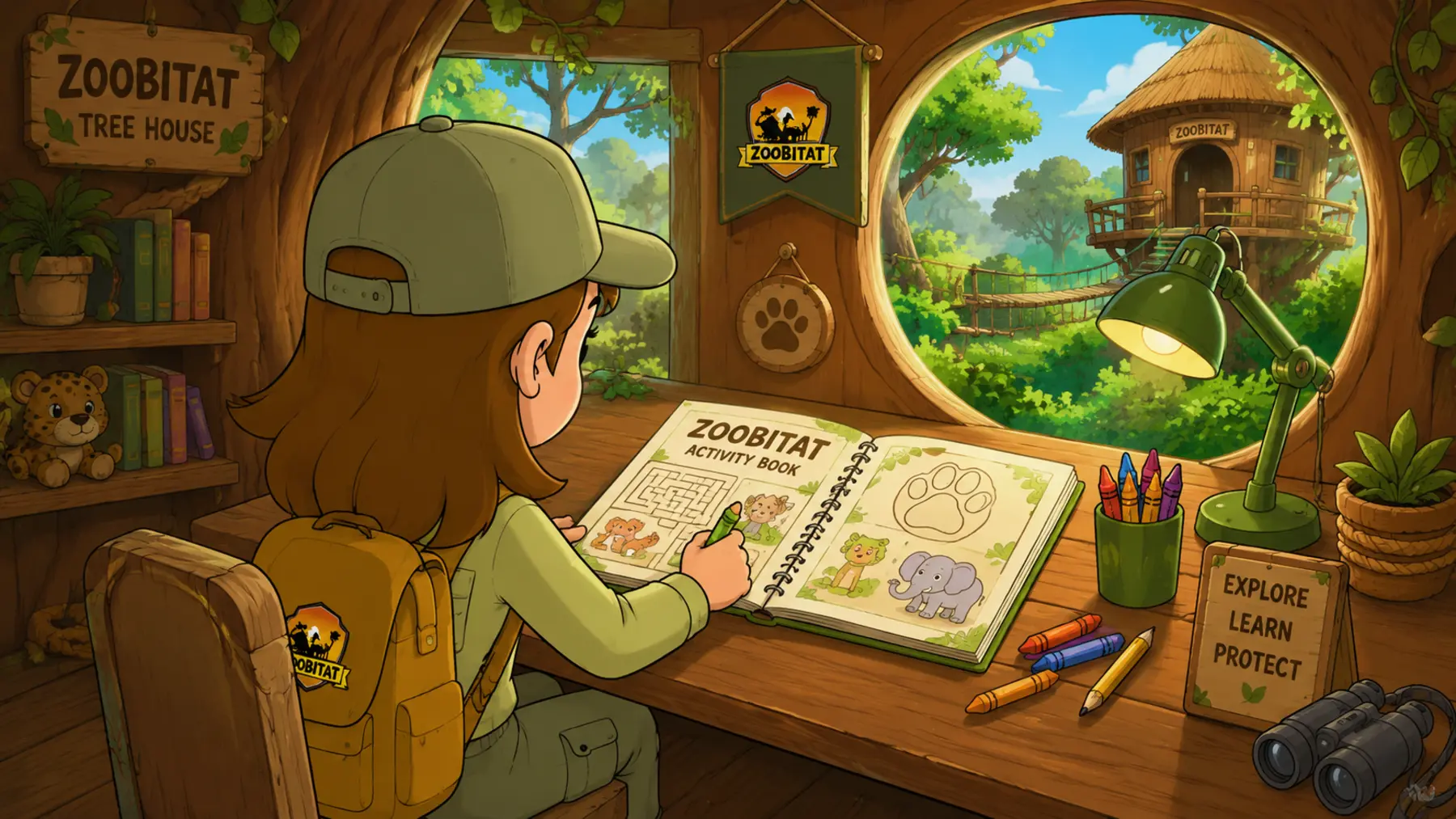
LET’S PLAY, WRITE AND EXPLORE!
ZOOBITAT ACTIVITY BOOKS
Draw, puzzle, explore—and become a ZoobiRanger!
ZOOBIRANGER RECRUIT PROGRAM
Choose your wildlife adventure
Open a book to work on it right here, or download a clean copy to print.
A note for grown-ups
These free activities are designed for young wildlife explorers. Drawings stay in this browser until a marked copy is downloaded; nothing is uploaded or shared.
FACT-CHECKING TRAIL
Activity book sources
The primary animal, habitat, behavior, anatomy and conservation facts in each activity book correspond to the authoritative educational references below. Conservation classifications can change as new assessments are published.
African Savanna Elephant2 sources
Supports facts about elephant size, trunks, ears, tusks, savanna habitat, herds, poaching, habitat loss and human–elephant conflict.
Blue Whale3 sources
Supports facts about blue whale size, krill diet, baleen feeding, calls, migration, ocean habitat, threats and conservation status.
Coral Reef2 sources
Supports facts about coral animals and polyps, reef ecosystems, coral–algae symbiosis, environmental threats and coral bleaching.
Gray Wolf2 sources
Supports facts about wolf size, diet, senses, family groups, tundra and other habitats, geographic range and conservation history.
Great Hammerhead Shark2 sources
Supports facts about the cephalofoil, body size, warm-water range, prey, electroreception, fishing pressure and conservation.
Lowland Gorilla2 sources
Supports facts about western lowland gorilla size, rainforest habitat, plant-based diet, nests, troop life, communication and threats.
Panamanian Golden Frog2 sources
Supports facts about Atelopus zeteki, stream habitat, size, coloration, diet, communication, critically endangered status and chytrid disease.
Pangolin2 sources
Supports facts about the eight pangolin species, keratin scales, insect diet, long tongue, defensive behavior, geographic range and wildlife trafficking.
Sumatran Tiger2 sources
Supports facts about tropical forest habitat, size, stripes, diet, solitary behavior, critically endangered status, poaching and deforestation.
White Rhino2 sources
Supports facts about white rhino size, horns, wide grazing mouth, grassland habitat, social behavior and northern and southern white rhino conservation.
References last reviewed September 17, 2026. External sources are written for grown-ups and educators.